How To Use A Jigsaw: Our Top Tips & Key Techniques For Successful Cuts

Contents
- Parts of a Jigsaw
- Blade
- Clamp
- Jigsaw Blade Guard
- Roller Guide
- Handle
- Shoe/Footplate
- Proper Technique in Using a Jigsaw
- Hold your piece of wood down with the help of a clamp.
- Make adjustments to the orbital action.
- Put your blade on.
- Now position your blade.
- Let it come to a full stop.
- How to Change Blades
- Can I Cut Metal as Well?
- Sources
A jigsaw is a great tool to add to your shop. It cuts wood far faster and with less effort than a hand saw, and it can make curves, cutouts and intricate shapes.
It might seem intimidating at first, but it’s one of the easier power saws to learn. You just need to know how it works and the proper techniques for using it safely.
Parts of a Jigsaw
The first thing you should do after acquiring your jigsaw is identifying all its parts and what their functions are. Here are the common parts of a jigsaw tool:
Blade
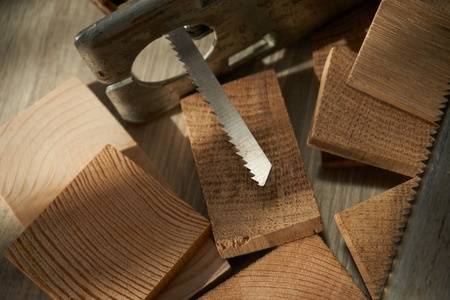
The blade does the cutting. It can either go up and down or do a reciprocating movement to cut through wood. You can swap it when it wears out or when you need a different kind of cut.
Standard blades have teeth pointing up and cut on the upstroke, which can splinter the top face. Reverse-tooth blades cut on the downstroke for a cleaner top surface. For ceramic tile, Family Handyman suggests a carbide-grit blade for tile up to 1/4 inch thick and a diamond blade for harder tile and stone.
Clamp
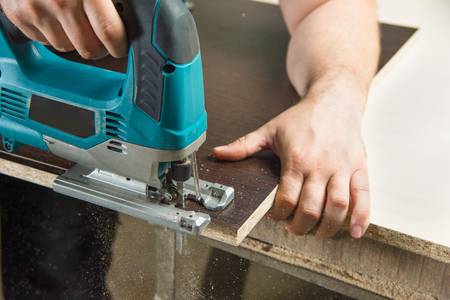
The blade clamp holds the blade in the saw and keeps it aligned. Jigsaw blades come with two shank styles: T-shank and U-shank.
Older saws and many U-shank clamps use a set screw, so you need a screwdriver or hex key to change blades. Most modern jigsaws use T-shank blades with a tool-free, quick-release clamp.
Jigsaw Blade Guard
This clear plastic or metal guard in front of the blade helps keep fingers away from it and deflects chips. On many saws it also helps direct dust toward the vacuum port.
Roller Guide
The roller guide supports the back of the blade and keeps it stable. It helps thinner blades resist bending as you cut.
Handle
This is where you will hold the jigsaw while you guide it in cutting the wood.
Shoe/Footplate
The shoe rests flat on the workpiece. On most jigsaws it tilts so you can make bevel cuts.
These are the essential parts of a jigsaw. Read your saw’s manual first, since features vary between models.
Proper Technique in Using a Jigsaw
Now here are the steps you should take when using a jigsaw:
Hold your piece of wood down with the help of a clamp.
Clamp the workpiece to a bench or sawhorses so it can’t move, with the cut line hanging past the edge so the blade won’t hit the bench. Mark your cut line before you start. Put on safety glasses.
Make adjustments to the orbital action.
Orbital action moves the blade forward on the upstroke. Higher settings cut faster but rougher; use low or no orbit for clean cuts, curves and metal.
Put your blade on.
With the saw unplugged or the battery removed, choose the right blade for your material and lock it in the clamp. Then plug the saw in or attach the battery.
Now position your blade.
Rest the front of the jigsaw shoe flat on the material, with the blade clear of the edge. Turn the saw on and let it reach full speed before the blade touches the material.
Then guide the saw along your line, keeping the shoe pressed flat and letting the blade do the work. Follow the line freehand for curves, or use an edge guide or clamped straightedge for straight cuts. Keep your hands away from the blade’s path, including under the workpiece.
Let it come to a full stop.
When you finish the cut, release the trigger and let the blade come to a full stop before lifting the saw out of the material. Unplug it or remove the battery so it can’t start accidentally.
How to Change Blades
Always unplug the saw or remove the battery first. There are two ways to change blades, depending on your jigsaw. If you have one of those older designs of jigsaw, you need to use a screwdriver to remove the screw that holds the blade in place. On saws with a tool-free clamp, you just push or twist the clamp lever to release the blade. Insert the new one and lock it in place. Let a used blade cool first, since it can be hot.
Can I Cut Metal as Well?
Yes, wood isn’t the only material a jigsaw can cut. With a metal-cutting or bi-metal blade, it can cut sheet metal, copper pipe and other light metal stock, and bi-metal blades can cut through wood with nails in it. Use a slower speed and turn the orbital action off for metal, and clamp the workpiece so it can’t vibrate.
Using a jigsaw isn’t as intimidating as many people think. Read the manual and practice on a few scrap pieces of wood first.
Ready to get your own jigsaw? View our best jigsaw picks in our roundup.
Sources
- How to Get The Most Out of Your Jigsaw, Family Handyman
- A Comprehensive Guide to Choosing and Using a Jigsaw, This Old House