How To Put Sandpaper On A Palm Sander: Our Quick & Easy Guide
Contents
Introduction
Sanding is one of the most common tasks in woodworking. You rub an abrasive across the wood to remove splinters, mill marks and other imperfections. For the smoothest finish, sand with the grain, since cross-grain scratches show up under a finish.
Sandpaper is paper or cloth backing coated with abrasive grains such as aluminum oxide or garnet. Power sanders speed up the job, and the palm sander is one of the simplest and lightest. One question people often have, though, is how to load new sandpaper. That’s what this guide covers.
What Is a Palm Sander?
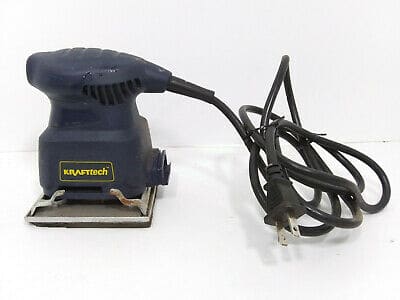
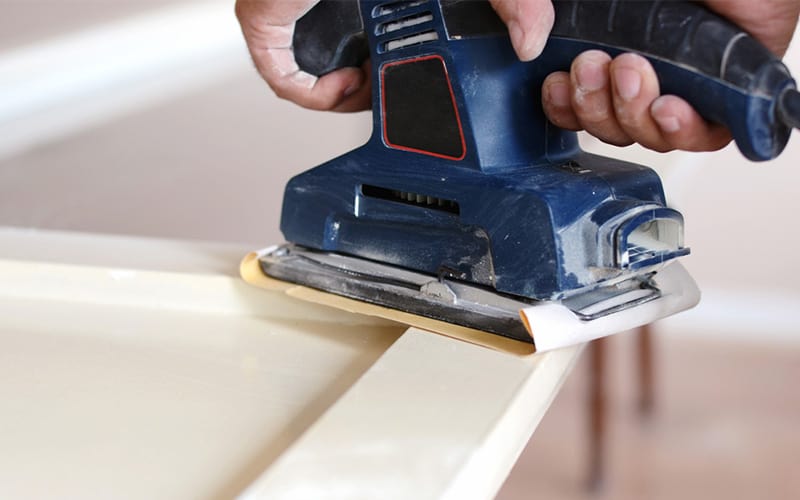
A palm sander is one of the smallest and easiest power sanders to use. It gets its name from the way you hold it: your palm rests on top while you guide it across the wood. The pad moves in small orbits, thousands of times per minute (DeWalt’s DWE6411, for example, runs at 14,000 orbits per minute).
Most palm sanders are inexpensive. You’ll need to load new paper when you change grits or when the abrasive wears out and stops cutting.
How to Load a Palm Sander
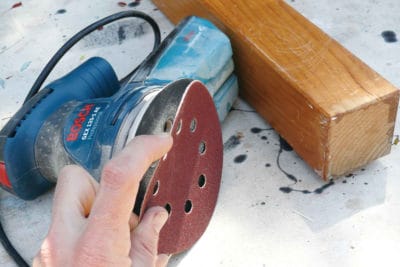
Loading a palm sander is simple. First, unplug the sander (or remove the battery) so it can’t start while your fingers are near the pad.
Next, cut the sandpaper to fit. Most sandpaper comes in 9 in. x 11 in. sheets, and most palm sanders take a quarter sheet. Not all pads are the same size, so measure yours before cutting. You can also buy precut quarter sheets.
Then find the paper clamps, usually lever-operated clamps at the front and back of the pad. Open them to release the old paper. Center the new sheet on the pad so it sits flat.
With the abrasive side facing down, tuck one end of the paper into the first clamp and close it. Pull the paper taut along the pad, tuck the other end into the opposite clamp and close it. A loose sheet tears quickly, so make sure it’s tight.
If your sander has dust collection holes, press the sanded pad onto the paper punch plate that came with it to punch matching holes. This lets the sander pull dust through the pad.
How to Choose Paper for a Palm Sander
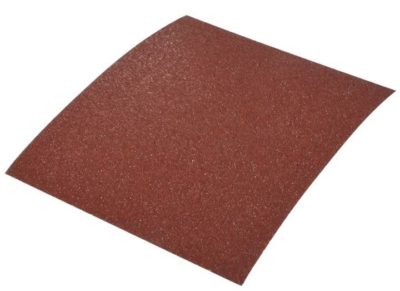
When sanding, it’s important to pick the right paper. Sandpaper is rated by grit. The lower the grit number, the coarser the paper and the earlier you use it in the sanding process. Palm sanders take any grit, so choose based on your project.
Coarse sandpaper tends to be between 40 and 60 grit. Medium sandpaper has a grit between 80 and 120, fine paper runs about 150 to 220, and very fine paper is 320 and up. Use 40-60 grit for heavy sanding and stripping, 80-120 for smoothing and removing imperfections, 150-220 for final sanding before finish, and finer grits for sanding between coats.
There are also several abrasive types: aluminum oxide, garnet, silicon carbide and ceramic. Fine Woodworking notes that aluminum oxide and ceramic grains are friable, so they break down to expose fresh cutting edges as you sand.
Aluminum oxide is the all-purpose choice for sanding wood with a power sander. Ceramic is the most aggressive and suits heavy stock removal. Garnet is a natural abrasive that wears quickly and is mostly used for hand sanding bare wood. Silicon carbide works well on metal, plastic and between coats of finish.
Wear safety glasses and a dust mask when sanding, since fine wood dust is easy to breathe in.
Conclusion
Putting sandpaper on a palm sander is simple. Unplug your palm sander, open the clamps, center a quarter sheet abrasive side down, clamp one end, pull it taut and clamp the other. Then punch the dust holes if your sander has them. If you’re unsure, check the instructions that came with your sander.
What’s Next
Now that you know how to put sandpaper in your palm sander, you can continue with your woodworking project. For more guides, tips and product reviews, check out our homepage.
Sources
- How to Sand Wood, With and Without Power Tools, Bob Vila
- Choosing Sandpaper, Fine Woodworking
- DWE6411 1/4 Sheet Palm Grip Sander, DeWalt