The Different Types of Sanders and Their Uses
Contents
- Belt Sander
- Belt Sander Uses
- Orbital Sander
- Orbital Sander Uses
- Random Orbital Sander
- Random Orbital Sander Uses
- Types Of Random Orbital Sanders
- Oscillating Spindle Sander (OSS)
- Benchtop Models
- Standard Models
- Oscillating Spindle Sander Uses
- Drywall Sander
- Belt Disc Sander
- Belt-Disc Sander Uses
- Drum Sander
- Benchtop Drum Sander
- Flooring Drum Sander
- Wood Sander
- Final Thought
- Sanding Safety
- Sources
Sanding by hand is slow. Power sanders speed it up, but each type is built for a different job.
Here are the main types of sanders and what each one does best.
Belt Sander
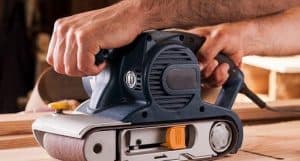
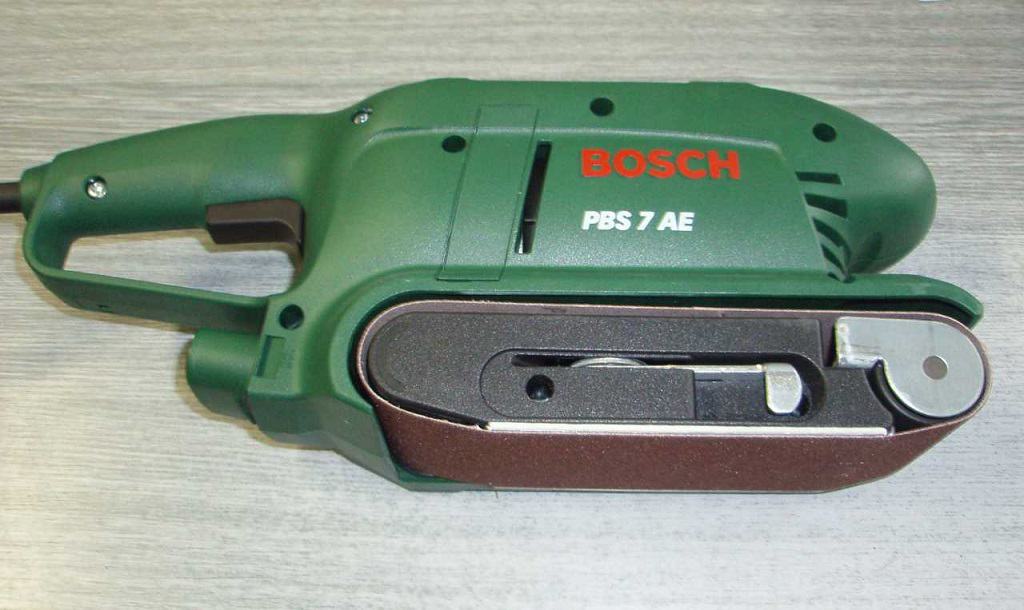
A belt sander is one of the most common power sanders.
A continuous sanding belt runs around two drums, one at the front and one at the back. The motor drives the rear drum, and the front drum spins freely.
A tension release lever makes belt changes quick, and a tracking knob keeps the belt centered.
Belt sanders are named by belt size. Common handheld sizes include 3 x 18, 3 x 21, 3 x 24 and 4 x 24 inches.
Belt Sander Uses
A belt sander removes material fast. Use it to level rough boards and glued-up tabletops, scribe pieces to fit, and strip old finish.
It is aggressive, so keep it moving and flat to avoid gouges. If old paint might contain lead, do not sand it dry; see the safety note at the end.
Orbital Sander
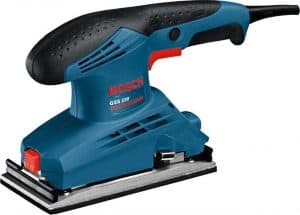
An orbital sander (also called a sheet or finishing sander) is used for light finish sanding.
It has a square or rectangular pad that moves in tiny orbits. Many use a quarter sheet of sandpaper, so it is often called a 1/4-sheet sander.
It is light, easy to control and a good first sander for beginners.
Orbital Sander Uses
Use it to ease sharp edges, level wood filler and scuff-sand between coats of finish.
The square pad reaches into corners that a round pad cannot.
It can finish a surface that was first sanded with a belt sander. Its downside is slow stock removal, and it can leave small swirl marks.
Random Orbital Sander
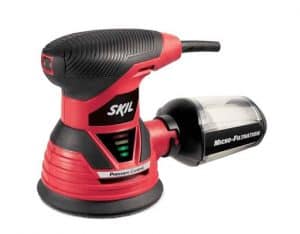
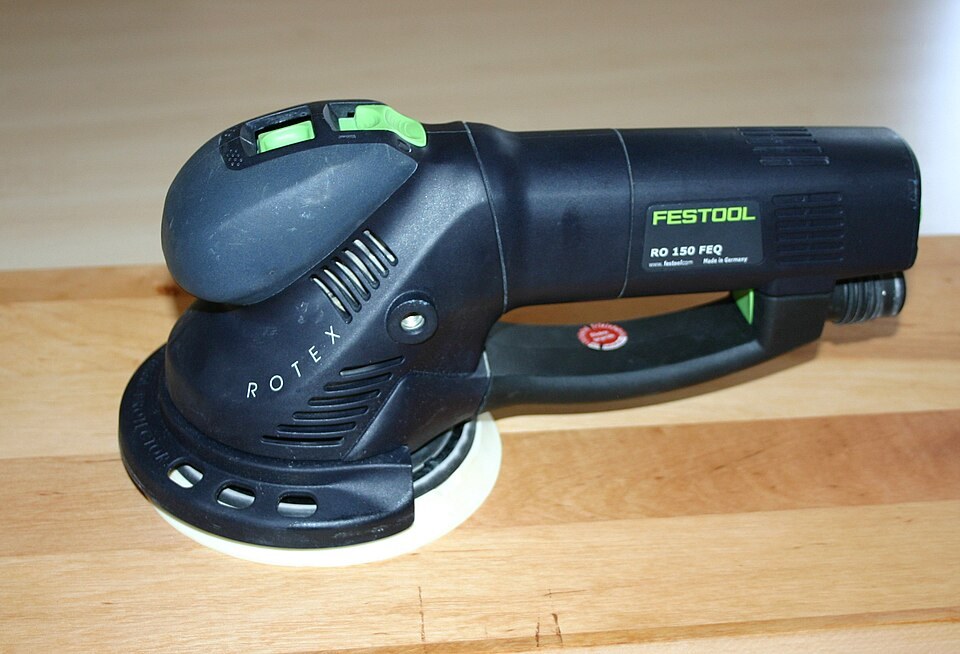
Random orbital sanders are portable, easy to use and popular with DIYers and pros alike.
The round pad spins while also moving in small, offset orbits, so the scratch pattern never repeats.
That makes it faster than a sheet sander and less likely to leave swirl marks.
The most common pad sizes are 5 and 6 inches, and most use hook-and-loop discs.
Random Orbital Sander Uses
Many woodworkers use a random orbital sander for most finish sanding because it leaves few swirl marks.
It does not remove wood as fast as a belt sander. If heavy stock removal is your main concern, a belt sander is faster.
If you buy only one sander for both rough and finish sanding, a random orbital sander is the best all-around choice.
Types Of Random Orbital Sanders
Palm Grip Sander
These are small, one-handed sanders, the most common type for general woodworking.
Pistol Grip Sander
These have a pistol-style handle and are often a bit more powerful than palm models.
Right Angle Sander
These are larger, two-handed sanders with the motor at a right angle to the pad, used for aggressive rough sanding.
Pneumatic Palm Grip
These run on compressed air. They are light and run cool, but need a large compressor, so they suit professional shops.
Oscillating Spindle Sander (OSS)
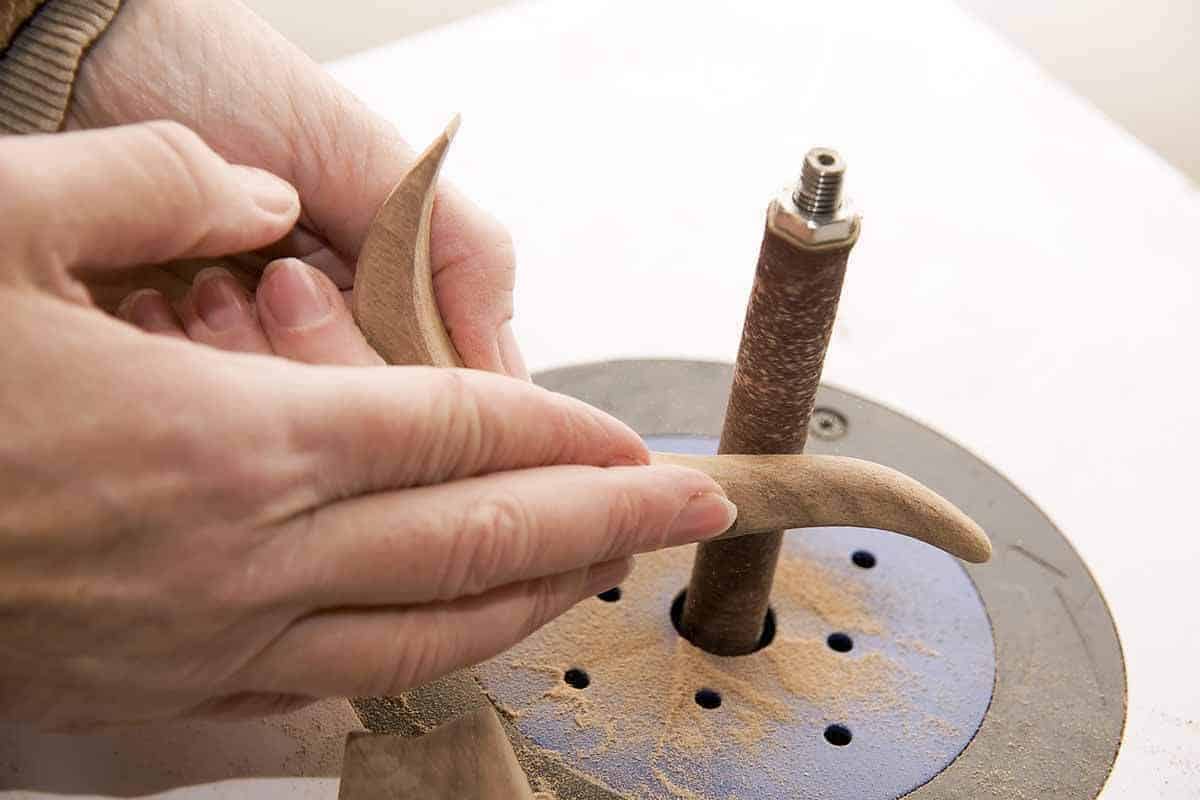
The oscillating spindle sander (OSS) has a vertical sanding drum that sticks up through a table. It comes in benchtop and floor-standing models.
The drum spins and moves up and down at the same time. The up-and-down motion spreads wear across the sleeve and reduces heat and burn marks.
The oscillating spindle sander is a unique sander, as it does what other sanders cannot do. Regular handheld sanders struggle with inside curves. An oscillating spindle sander makes them easy.
It comes in benchtop and floor-standing models.
Benchtop Models
Benchtop models come with several interchangeable spindles, commonly from about 1/2 inch to 2 inches in diameter.
Standard Models
Floor-standing models are heavier and often take larger spindles. Some combination models also convert to an oscillating edge belt sander.
Oscillating Spindle Sander Uses
Woodworkers use this sander to smooth curved edges, such as those cut on a band saw or scroll saw. Models with a tilting table can also sand beveled edges.
It is the best sander for inside curves.
Drywall Sander
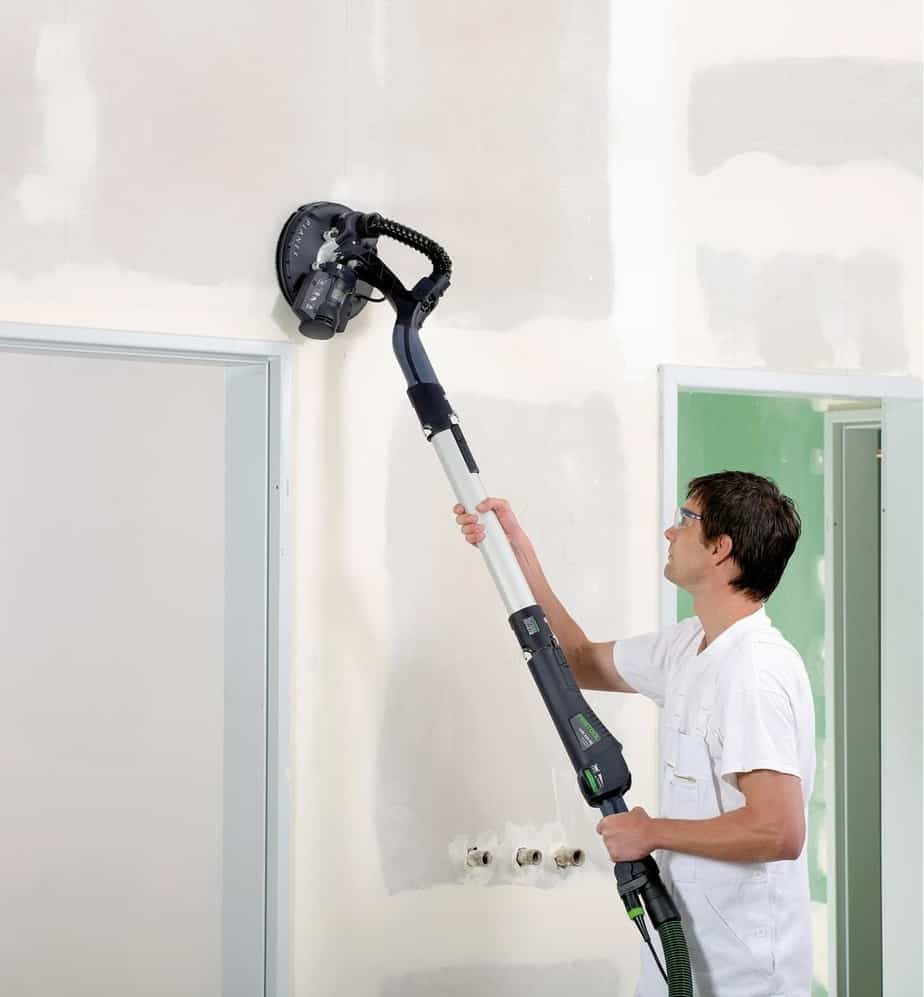
A drywall sander is a round sanding head on a long pole, which lets you reach walls and ceilings with less ladder work.
Most connect to a vacuum to capture the fine dust. It is used to smooth dried joint compound on drywall seams. Wear a dust mask or respirator, since drywall dust is very fine.
Belt Disc Sander
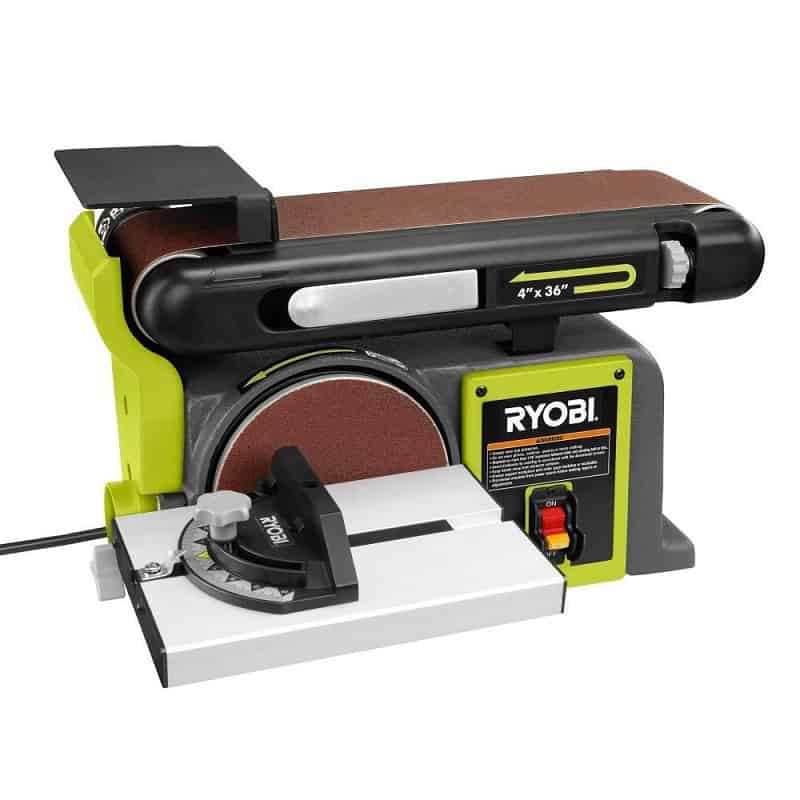
A belt-disc sander is a sanding tool that combines the functionality of the belt and disc sander in one tool, just as the name implies. This sander is pretty powerful and it comes with both disc and belt sanding surfaces. This means you can use this sander for a wide range of sanding jobs.
You can use it to do virtually everything that you can do with each of the individual tools. However, belt-disc sanders are heavy tools and they are pretty large.
Their heavy base keeps vibration down. Consider one if you have room for a stationary sander.
Belt-Disc Sander Uses
Woodworkers use it to shape and square small parts, sand end grain and remove hardened glue.
You can use it to do practically everything a disc or belt sander would do. However, the major downside to this tool is that it occupies space.
Drum Sander
A drum sander is a larger, more expensive machine, so many hobbyists consider it a luxury.
There are two major types of drum sanders. The first is the benchtop drum sander, which is used for woodworking. The second is the flooring drum sander.
Benchtop Drum Sander
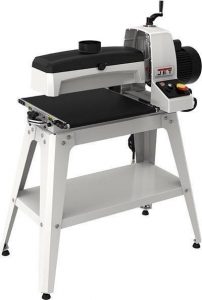
A benchtop drum sander has a large rotating drum wrapped in abrasive and a conveyor belt that feeds the board under it. It flattens boards and brings them to a uniform thickness.
You set the height, feed the board in one end and catch it at the other. Each pass should remove only a thin layer, so it takes several light passes to reduce thickness.
Nevertheless, you should know that there is a difference between a planer and a drum sander. You can check out this guide to know the difference between a drum sander and a planer.
A drum sander cannot replace a planer. A planer removes material much faster, while a drum sander gives a smoother surface and handles figured wood and thin stock without tear-out.
Flooring Drum Sander
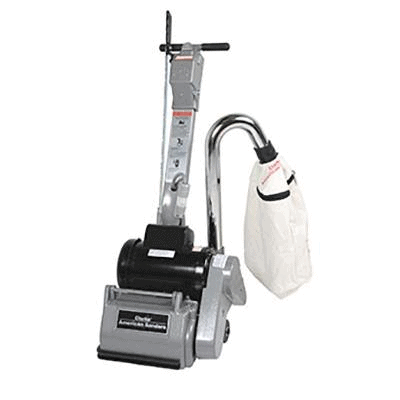
A floor drum sander refinishes hardwood floors. It is heavy and powerful, so most homeowners rent one.
It is hard to control. If it stops in one spot with the drum down, it can gouge the floor.
It strips old finish quickly over a large area. In homes built before 1978, old floor and trim finishes may include lead-based paint; see the safety note below before sanding.
Wood Sander
For most woodworking, the core sanders are a belt sander, a random orbital sander, a disc sander and a finishing sander. You can check out our best belt sanders here. Here is a link to the best disc sanders on the market. The best random orbital sanders are here.
Final Thought
Match the sander to the job: a belt sander for fast removal, a random orbital sander for general finishing, a sheet sander for corners, and a spindle sander for curves.
Sanding Safety
Sanding makes fine dust. OSHA notes that airborne wood dust may cause respiratory symptoms and cancer, so use dust collection and wear a properly fitted respirator.
If your home was built before 1978, the EPA warns it is more likely to have lead-based paint. Test old paint before sanding. If you must sand, the EPA advises wetting the area first, sanding the minimum area needed and cleaning up thoroughly.
Sources
- Wood Dust: Overview, OSHA
- Reduce the Risk of Lead Exposure at Home, US EPA