Best Japanese Hand Saw Reviews: Our Top Picks For The Money
Contents
- Best Japanese Saw Reviews
- 1. Suizan Japanese Hand Saw
- 2. Gyokucho 770-3600 Razor Ryoba Saw with Blade
- 3. Okada Hardware Japanese Mini Dozuki Panel Saw
- 4. Topman Authentic Japanese Woodworking Flush Cut Trim Saw
- Which Japanese Saw is the Best Choice for You?
- Why Should You Get a Japanese Saw?
- Conclusion
- Sources
 If you are a woodworker, one of the additional things you should consider adding to your tools is a handy Japanese saw. Japanese saws cut on the pull stroke, which lets them use thin blades that cut fine, accurate kerfs with little effort. Here are four good ones and what each does best.
Best Japanese Saw Reviews
Make sure you get the following Japanese saws:
- [Suizan Japanese Hand Saw](https://www.amazon.com/dp/B07314SWRF?tag=wwnation-20)
- Gyokucho 770-3600 Razor Ryoba Saw with Blade
- Okada Hardware Japanese Mini Dozuki Panel Saw
- Topman Authentic Japanese Woodworking Flush Cut Trim Saw
Now find out more why these Japanese saws are the best:
1. Suizan Japanese Hand Saw
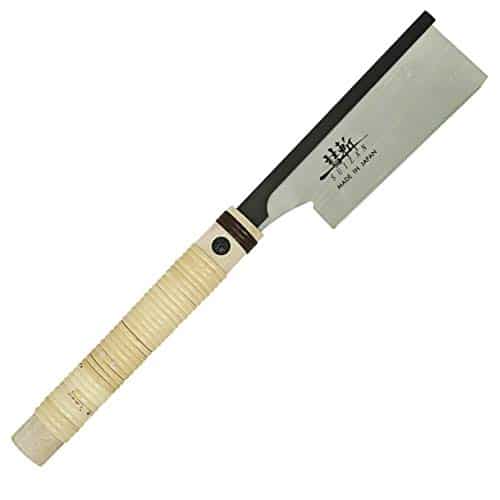
Suizan's pull saw makes clean, accurate cuts with little hand effort.
The hardened teeth are hard to resharpen, so when the blade dulls you swap in a replacement blade. The thin blade cuts a narrow kerf for cleaner, more accurate cuts on both bigger projects and small finishing cuts.
Pros:
The blade stays sharp a long time, and replacement blades are easy to find.
It leaves a clean cut with little tear-out, so less sanding is needed.
It takes little effort to saw, which helps people with weaker hands or wrists.
Because the kerf is thin, you can make dovetails with this. It is also suitable for small scale projects. It cuts smoothly and rarely binds.
The handle is comfortable for long sessions.
Cons:
Some did not like the plastic handle.
2. Gyokucho 770-3600 Razor Ryoba Saw with Blade
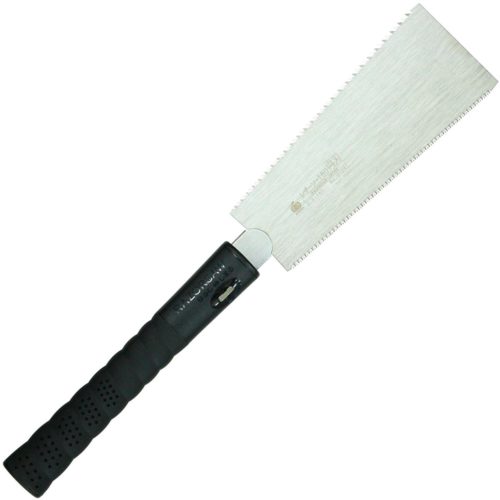
A ryoba has rip teeth on one edge and crosscut teeth on the other, so one saw handles both cuts. This compact Gyokucho is listed at 15 inches overall with a 7-inch blade. Its hardened teeth stay sharp a long time.
The rattan-wrapped handles make way for more secure and more stable grip. Replacement of blade is also a cinch. Its compact size makes it easy to carry. It accepts #155638 type of replacement blade.
Pros:
It handles crosscuts and rips in small and medium stock.
The crosscut edge has finer teeth than the rip edge, which gives smooth crosscuts and faster rips.
This is an affordable Japanese saw that does what it promises to do. If you are looking for a Japanese saw that has a good quality but isn’t too heavy on the pocket, this is a good choice.
The rattan-wrapped handle is comfortable.
It is small and lightweight.
The narrow kerf wastes little wood and gives fine, accurate cuts in softwood and hardwood.
It comes with a plastic sleeve that you can use to protect the saw from damage during transport.
Cons:
Some people find the blade too flexible.
3. Okada Hardware Japanese Mini Dozuki Panel Saw
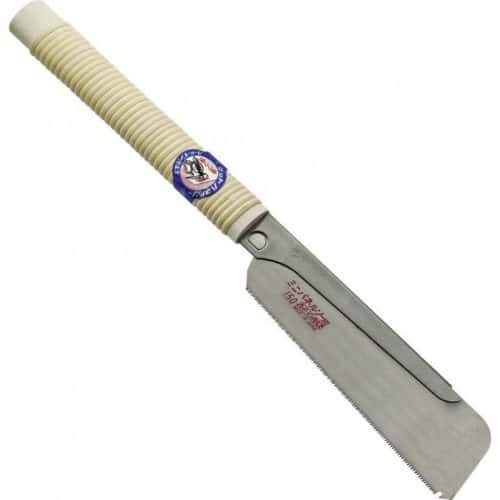
This small saw is easy for beginners to control. It suits cutting and scoring veneers and thin panels, and the seller notes hook-shaped teeth at the tip for starting cuts.
Since it is a Dozuki blade, it has a metal backbone that reinforces the blade and maintains its stiffness. The blade is 150 mm (about 6 inches) long, and the handle is wrapped for a better grip.
Pros:
It is precise and leaves clean cuts after a little practice.
The backing not just keeps it stiff, it also ensures that all the cuts you make are precise and straight.
It cuts softwood easily and hardwood with a bit more effort.
The induction-hardened teeth hold their edge a long time, though like most hardened teeth they cannot be resharpened.
It is good for fine joinery such as small dovetails, and it is the least expensive saw here.
Cons:
Because of the back, this might not be ideal in making deeper cuts.
4. Topman Authentic Japanese Woodworking Flush Cut Trim Saw
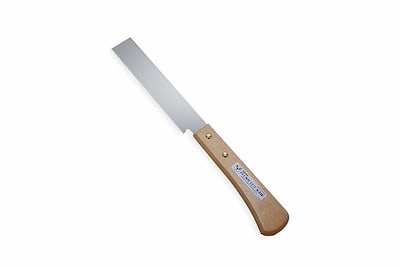
This flush cut saw has a thin, flexible high carbon steel blade. Pulling keeps the blade under tension so it does not buckle. Use it to trim dowels, pegs and plugs flush with a surface.
Its teeth have no set, so the blade can lie flat on your work without scratching it, and the triple-edge tooth design cuts through the wood cleanly. The blade is 6-1/4 inches long, and the wooden handle is 5-3/4 inches.
Pros:
It is sold as made in Japan.
The blade is thin and flexible but does not feel flimsy, and it is sharp out of the box. For rougher cuts in green wood, see our bow saw reviews.
The handle is comfortable.
The flexible blade reaches tight corners.
It is affordable.
The unset teeth do not scratch the surrounding surface.
Cons:
Some said the blade could use a bit more rigidness.
Which Japanese Saw is the Best Choice for You?
Maintains Its Sharpness: Suizan Japanese Hand Saw. It holds its edge well with frequent use, and replacement blades are easy to find. It cuts even thicker woods with little effort.
Lightweight and Compact: Gyokucho 770-3600 Razor Ryoba Saw with Blade. A compact ryoba with rip and crosscut teeth, so one saw covers both kinds of cuts.
Excellent Choice as a Finishing Saw: Okada Hardware Japanese Mini Dozuki Panel Saw. Its stiff back and fine teeth suit precise joinery and finishing cuts at a low price.
Clean and Consistent Cuts: Topman Authentic Japanese Woodworking Flush Cut Trim Saw. The best choice for trimming dowels and plugs flush without marring the surface.
Why Should You Get a Japanese Saw?
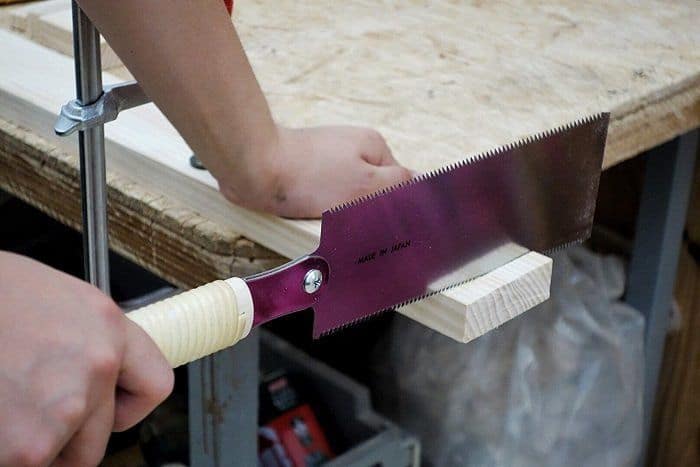
A Japanese saw is different from a Western saw in the sense that these saws promote a pulling action rather than the pushing action that is used in Western saws.
Pulling keeps the blade under tension, so it can be much thinner than a Western blade. This Old House's Japanese handsaw guide notes that Japanese blades can be up to 75% slimmer, giving narrower kerfs and cleaner cuts.
You can use a Japanese saw standing at a bench or seated, whichever is comfortable.
The pull stroke takes less pressure and a lighter grip, which helps people with sore hands.
The main types are the ryoba (rip and crosscut edges), the dozuki (stiff back for joinery) and the flush cut saw. Thin blades kink if you push hard or twist them, so let the saw do the work. Keep your guiding hand clear of the blade when starting a cut.
Japanese saws are for wood. If you’re cutting metal, then it’s a hacksaw for you.
Conclusion
For general use, start with a ryoba such as the Gyokucho or the Suizan pull saw. Add a dozuki for joinery and a flush cut saw for trimming. Check out our homepage for more woodworking tool guides.
Sources
- The Ultimate Guide to Japanese Handsaws, This Old House
- How To Choose Handsaws for Your Next Home Project, This Old House