Radial Arm Saw vs Miter Saw
If you grew up in a household that loved woodworking, there’s a good chance you had a radial arm saw in the garage or the shed. Some of you might still use one today.
Most home woodworkers don't anymore. The radial arm saw has become rare in home shops.
The radial arm saw was a versatile tool in its day. As sliding compound miter saws became common, many woodworkers switched to them for crosscutting.
Main Differences Between Radial Arm Saw vs Miter Saw
The main differences between Radial Arm Saw vs Miter Saw are:
- A miter saw is portable, while a radial arm saw is big, heavy, and usually stays in one place.
- A radial arm saw usually has a wider crosscut capacity, and it can also rip boards and cut dados.
- A miter saw is generally easier to use safely for crosscuts. Radial arm saws do have blade guards, but the blade can climb toward you during a crosscut, and ripping on one carries a serious kickback risk.
For most modern woodworkers, the miter saw is the more practical choice. If you still use an old radial arm saw, good for you. Here is what an upgrade to a miter saw could do for your work.
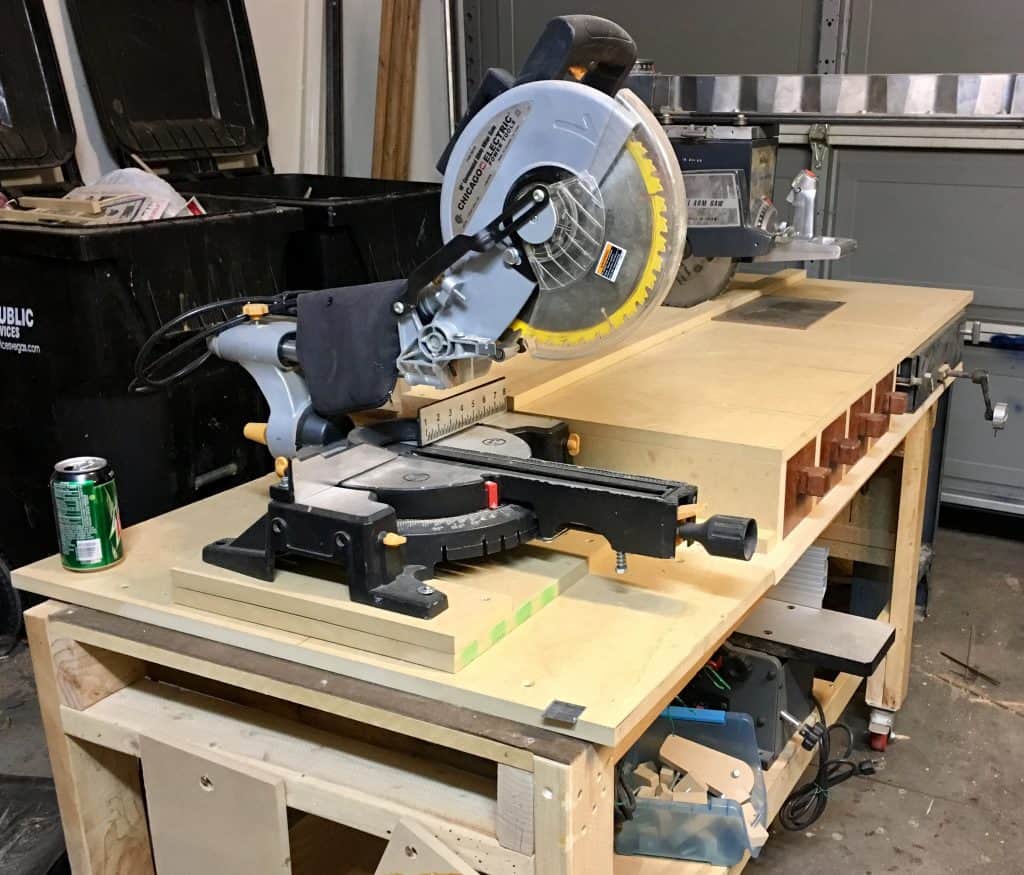
#1. Miter saws offer sliding arms today. Many miter saws now use blades as large as 12 inches. Sliding models add crosscut capacity, so you can cut wide boards quickly and accurately. A sliding miter saw makes most of the crosscuts a radial arm saw would make, in a fraction of the space. A miter saw can go almost anywhere.
#2. Miter saws don’t bite you like radial arm saws. If you’ve ever used a radial arm saw, then you know how easy it was for that tool to bite you. When you pull a radial arm saw through a crosscut, the blade's rotation tends to climb the wood and pull the saw toward you. When ripping, the stock must be fed against the blade's rotation, as OSHA's woodworking machinery rule requires, or it can be thrown. With a miter saw, the board stays clamped or held still, and the blade comes down through it.
#3. Miter saws can't rip lumber; radial arm saws can. To be fair, a radial arm saw can rip lumber with the motor rotated and a proper setup. Never rip on a miter saw. Miter saw manuals tell you to hold the workpiece still against the fence and never feed it into the blade or cut freehand. Many sliding miter saws do have a depth stop that lets you cut shallow dados and notches.
Here’s proof of what you can do with a table saw or a miter saw.
#4. Miter saws let you make those tough angle cuts. Miter saws pivot for miters and tilt for bevels, so you can make the same compound angle cuts that a radial arm saw let you do. Positive stops and angle scales make common angles quick to set. Just make sure to invest in a miter saw stand for maximum precision and efficiency.
#5. Miter saws have an effective blade guard. A miter saw's lower guard retracts as the blade comes down and covers it again as you raise the head. Radial arm saws also have guards, but more of the blade is exposed as it travels across the table.
Miter saws also cost less than most radial arm saws. See our best miter saw guide for options that fit a home shop budget. The radial arm saw had its day to shine, and it still has uses. For most modern woodworkers, though, a miter saw is the better buy.