The Best Table Saw Blades: Reviews and Guide
Contents
- Our Top Table Saw Blades Are:
- 1. Forrest WW10407125: Best 10-Inch Table Saw Blade
- 2. Overpeak 10 inch Circular Saw Blade
- 3. Freud D1050X Diablo: Runner Up
- 4. Forrest WW10407100 Woodworker II
- 5. Freud LU87R010
- 6. HICO 40-Tooth ATB Table-Saw Blade
- 7. DEWALT DW3106P5
- 8. INGTERCO 80-Tooth ATB Table-Saw Blade
- 9. Irwin 1807368 Table Saw Blade
- Buying Guide: How To Choose A Table Saw Blade
- The Type Of The Table Saw
- Type Of Material And Cut
- Tooth Count
- The Blade’s Gullet
- Kerf
- Teeth Quality
- Blade Protection
- Blade Tooth Configuration
- Cost
- Brand
- Blade Safety
- Final Thoughts
- Sources
The blade matters as much as the saw. A good blade cuts cleanly, feeds smoothly and is less likely to burn or bind, which also makes the saw safer to use.
The right blade depends on the cut: few teeth for ripping, many teeth for crosscuts and plywood, and a combination or general-purpose blade for both. Here are nine blades, followed by a guide to tooth counts, grinds and kerf.
OUR TOP PICK
The Forrest WW10407125 is our first choice: Forrest's 40-tooth Woodworker II, a premium general-purpose blade that rips and crosscuts cleanly.
Our Top Table Saw Blades Are:
| Product | Details | ||
|---|---|---|---|
| 1. Forrest WW10407125 | 1. Forrest WW10407125 Top Pick | - Teeth: 40 - Kerf: 1/8 inch (full kerf) - Material: Carbide | Check Current Price |
| 2. Overpeak 10 inch Circular Saw Blade | 2. Overpeak 10 inch Circular Saw Blade | - Weight: 1.45 pounds - Dimensions: 11.4 x 11.2 x 0.2 inches - Material: Carbide - Arbor: 5/8-Inch | Check Current Price |
| 3. Freud D1050X Diablo | 3. Freud D1050X Diablo | - Teeth: 50 (combination) - Thin kerf - Material: Carbide | Check Current Price |
| 4. Forrest WW10407100 Woodworker II | 4. Forrest WW10407100 Woodworker II | - Teeth: 40 - Thin kerf version - Material: carbide | Check Current Price |
| 5. Freud LU87R010 | 5. Freud LU87R010 | - Teeth: 24 (rip) - Thin kerf - Material: Carbide | Check Current Price |
| 6. HICO 40-Tooth ATB Table-Saw Blade | 6. HICO 40-Tooth ATB Table-Saw Blade | - Weight: 1.55 pounds - Dimensions: 10 x 10 x 0.1 inches - Material: High-density carbide with titanium - Blade diameter: 10-inch | Check Current Price |
| 7. DEWALT DW3106P5 | 7. DEWALT DW3106P5 | - Two blades: 60 teeth and 32 teeth - Arbor: 5/8 inch | Check Current Price |
| 8. INGTERCO 80-Tooth ATB Table-Saw Blade | 8. INGTERCO 80-Tooth ATB Table-Saw Blade | - Weight: 1.6 pounds - Dimensions: 10.9 x 10.2 x 0.6 inches - Material: Titanium Carbide - Blade length: 10-inch - Teeth: 80 | Check Current Price |
| 9. Irwin 1807368 Table Saw Blade | 9. Irwin 1807368 Table Saw Blade | - Weight: 1.76 pounds - Dimensions: 12.9 x 11.7 x 0.4 inches - Material: carbide | Check Current Price |
1. Forrest WW10407125: Best 10-Inch Table Saw Blade
The Forrest Woodworker II has a long reputation as one of the best general-purpose blades you can buy. This version has 40 teeth and a full 1/8-inch kerf, which suits a full-size cabinet or contractor saw.
It rips and crosscuts cleanly enough that many woodworkers leave it on the saw for almost everything. Forrest uses C-4 carbide teeth and hand-tensions its blades so they run flat and true.
The edge lasts a long time, and Forrest offers factory resharpening to restore it.
Specs
- Teeth: 40
- Kerf: 1/8 inch
- Material: Carbide
Pros
- Designed with tough carbide for extra strength
- Rips and crosscuts cleanly
- Factory resharpening available
- Long-lasting
Cons
- Expensive
- Full kerf needs a saw with enough power
2. Overpeak 10 inch Circular Saw Blade
Overpeak's 10-inch blade is a budget option with tungsten carbide teeth and a thin kerf that cuts easily on lower-powered saws.
The alternate top bevel (ATB) teeth give clean crosscuts in wood. Laser-cut expansion slots let the plate expand as it heats without warping and help reduce noise and vibration.
Specs
- Weight: 1.45 pounds
- Dimensions: 11.4 x 11.2 x 0.2 inches
- Material: Carbide
- Arbor: 5/8-Inch
Pros
- Low noise and vibration levels
- Comes with a thin kerf that makes it easy to cut smooth cuts with ease
- Can be used to cut a wide range of workpieces
Cons
- Pricey
3. Freud D1050X Diablo: Runner Up
Our runner-up is the Diablo D1050X, a 10-inch, 50-tooth combination blade for ripping and crosscutting wood. It is a good value all-round blade.
It has carbide teeth, Diablo's Perma-SHIELD non-stick coating, and a thin kerf that cuts easily on smaller saws.
Laser-cut heat expansion slots let the plate expand without warping, and stabilizer vents reduce noise and vibration.
Specs
- Teeth: 50 (combination)
- Thin kerf
- Material: Carbide
Pros
- Can be used to cut a wide range of materials
- Expansion slots reduce heat warping
- Tri-metal shock-resistant brazing holds the teeth
- Durable
Cons
- Combination grind is a compromise for heavy ripping
4. Forrest WW10407100 Woodworker II
This is the same 40-tooth Woodworker II as our top pick, but with a thinner kerf. A thinner kerf removes less wood and needs less power, which suits contractor and jobsite saws with smaller motors.
It is hand-tensioned like the full-kerf version and feeds easily for moderate rips and crosscuts. Use a riving knife or splitter thinner than the kerf.
Forrest offers factory resharpening that restores the blade to its original tolerances.
Specs
- Teeth: 40
- Thin kerf
- Material: Carbide
Pros
- Designed to deliver superior cuts and smooth edges
- Can be used to cut a wide range of materials
- Long lasting
Cons
- Expensive
5. Freud LU87R010
The Freud LU87R010 is a 24-tooth thin-kerf ripping blade. Few teeth and big gullets clear sawdust fast, so it rips thick hardwood quickly, even on a lower-powered saw.
The thin kerf removes less material than a full-kerf blade, which reduces the load on the motor. The teeth are Freud's TiCo high-density carbide.
Perma-SHIELD non-stick coating reduces friction, heat and pitch buildup. Use it for ripping only; for crosscuts and plywood, switch to a blade with more teeth.
Specs
- Weight: 1.65 pounds
- Dimensions: 10.3 x 10.1 x 0.6 inches
- Material: Carbide
Pros
- Fast, clean rips in thick stock
- Comes with a small kerf for smooth and clean cuts
- Uses Perma-SHIELD coating to reduce friction and heat build-up
- The blade is designed with hardened carbide for enhanced strength and durability
- Sold with a limited lifetime guarantee
Cons
- Rip blade only: rough on crosscuts, plywood and laminate
6. HICO 40-Tooth ATB Table-Saw Blade
The HICO 40-tooth blade is a budget general-purpose blade with carbide teeth and a high alternate top bevel (Hi-ATB) grind. It handles molding, veneer plywood, hardwood and softwood.
Stabilizer slots in the plate help reduce vibration, noise and heat. The thin kerf (about 0.1 inch) cuts easily on smaller saws, and the Hi-ATB teeth leave a clean edge.
Specs
- Weight: 1.55 pounds
- Dimensions: 10 x 10 x 0.1 inches
- Material: High-density carbide with titanium
- Blade diameter: 10-inch
Pros
- Versatile 40-tooth general-purpose blade
- Engineered to help reduce overheating, vibrations and keep the blade cool
- Durable
Cons
- Larger distance between the blade’s teeth may result in splintering
7. DEWALT DW3106P5
The DeWalt DW3106P5 is a two-blade value pack: a 60-tooth fine-finish blade and a 32-tooth general-purpose blade, both 10 inches with thin kerfs. DeWalt designs them for fast cutting of natural woods and composites.
Use the 32-tooth blade for rips and rough work and the 60-tooth blade for crosscuts and trim. Both work on table saws and 10-inch miter saws.
The carbide teeth have a wedge shoulder behind each tooth for support, and computer-balanced plates reduce vibration for a smoother finish.
Specs
- Two blades: 60 teeth and 32 teeth
- Arbor: 5/8 inch
Pros
- Two blades for different jobs
- Can be used for cutting a wide range of materials
- Makes smooth cuts without splintering and damaging workpieces
- Good value for a jobsite saw
Cons
- Construction-grade finish, not as clean as premium blades
8. INGTERCO 80-Tooth ATB Table-Saw Blade
The INGTERCO 80-tooth blade is a fine-finish crosscut blade, not a heavy ripping blade. Like any 80-tooth saw blade, its many small teeth leave a smooth edge on crosscuts, plywood and trim, but they cut slowly and can burn in thick rips.
Its teeth use an alternate top bevel (ATB) grind, which shears wood fibers cleanly. Check that the blade's maximum RPM rating is above your saw's no-load speed.
A non-stick coating helps resist pitch buildup and corrosion.
Specs
- Weight: 1.6 pounds
- Dimensions: 10.9 x 10.2 x 0.6 inches
- Material: Titanium Carbide
- Blade length: 10-inch
- Teeth: 80
Pros
- Smooth crosscuts and plywood cuts
- Non-stick coating
Cons
- Slow and prone to burning when ripping thick stock
9. Irwin 1807368 Table Saw Blade
The Irwin 1807368 is a 10-inch, 80-tooth fine-finish blade with a 5/8-inch arbor and a thin kerf. It suits molding, veneer plywood, hardwood and softwood crosscuts.
The carbide teeth use a steep Hi-ATB grind that slices wood fibers like shears, reducing tear-out. A heat-resistant non-stick coating reduces gumming.
Specs
- Weight: 1.76 pounds
- Dimensions: 12.9 x 11.7 x 0.4 inches
- Material: Carbide
Pros
- Works well with both table saws and miter saws
- Hi-ATB teeth reduce tear-out
- Made with small kerf for smooth cuts
- Can be used for cutting a wide range of workpieces
Cons
- Not for ripping thick stock
Buying Guide: How To Choose A Table Saw Blade
The Type Of The Table Saw
Match the blade to the saw. Check the diameter (usually 10 inches), the arbor size (usually 5/8 inch), and that the blade's maximum RPM rating is higher than the saw's speed.
If your saw has a riving knife, the blade's kerf must be wider than the riving knife is thick, or the stock will bind on the knife. Many jobsite saws are designed for thin-kerf blades.
Type Of Material And Cut
Blades are made for ripping, crosscutting, sheet goods or a mix. If you do mostly one kind of cut, a dedicated blade gives the best results. For a mix of projects, a 40 or 50-tooth general-purpose or combination blade is the practical choice.
Tooth Count
On a 10-inch blade, 24 to 30 teeth is typical for ripping, 40 to 50 for general purpose and combination blades, and 60 to 80 for fine crosscuts and plywood.
More teeth give a smoother cut but feed slower and can burn in thick rips. Fewer teeth cut faster but rougher.
The Blade’s Gullet
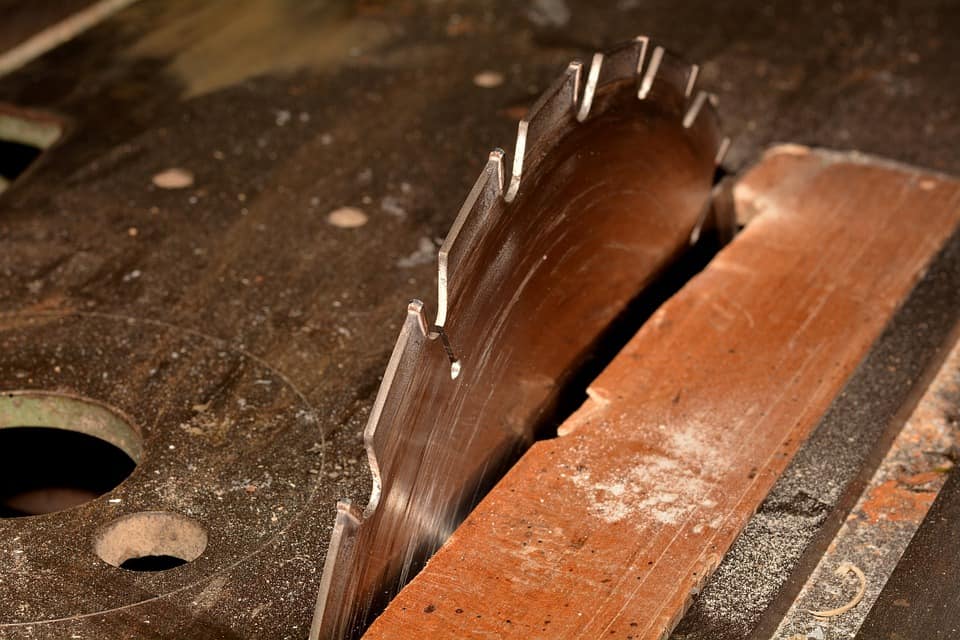
The gullet is the space in front of each tooth that carries chips out of the cut. Ripping produces long chips at a fast feed rate, so rip blades have large gullets. Crosscut blades have smaller gullets and more teeth.
Kerf
Kerf is the width of the cut, set by the width of the teeth. Full-kerf blades are about 1/8 inch; thin-kerf blades are about 3/32 inch.
Thin-kerf blades remove less wood and are easier on smaller motors. Full-kerf blades are stiffer and suit powerful cabinet saws. Make sure your riving knife or splitter is thinner than the kerf.
Teeth Quality
Nearly all table saw blades use carbide teeth, which stay sharp far longer than steel. Better blades use finer-grain carbide and thicker teeth that can be resharpened more times.
Blade Protection
If you use the table saw to cut resinous or wet wood, pitch builds up on the blade, which causes burning and drag. A non-stick coating helps.
Clean pitch off with a blade cleaner, keep blades dry, and store them so the teeth do not touch other tools.
Blade Tooth Configuration
The teeth configuration of a saw can determine how the final cut will look like. The configuration is particularly important when you are targeting to make precision cuts on laminates and wood. So, here are the main configurations:
Flat Top (FT)
Flat-topped teeth chisel straight across the grain ends. FT is the standard grind on rip blades because it cuts fast along the grain, but it leaves a rough crosscut.
Alternative Top Bevel (abbreviated ATB)
The teeth are beveled alternately to the left and right, so each tooth slices the fibers like a knife. ATB gives clean crosscuts in solid wood and veneered plywood.
Teeth Combination (Comb)
Combination blades mix both: typically groups of four ATB teeth and one flat raker tooth, with a deep gullet before each group. They handle both rips and crosscuts reasonably well.
TCG (Triple-Chip-Grind)
TCG alternates a chamfered (trapezoid) tooth with a flat raker tooth. It is made for hard, abrasive materials such as laminates, melamine, plastics and non-ferrous metals.
High Alternative Top Bevel (Hi-ATB)
Hi-ATB teeth have a steeper bevel than standard ATB. They give the cleanest crosscuts and the least chipping on veneers and melamine, but the sharp points dull faster.
Cost
Blades range from budget to premium. A premium blade that can be resharpened several times often costs less over its life than replacing cheap blades.
Brand
Established blade makers such as Forrest, Freud (Diablo), DeWalt and Irwin publish clear specs and stand behind their blades.
Blade Safety
- Unplug the saw before changing blades, and install the blade with the teeth pointing toward the front of the saw.
- Use the guard, a spreader or riving knife to prevent kickback during ripping, and anti-kickback pawls.
- Use a push stick for narrow pieces, set the blade height correctly, and keep blades clean and sharp. OSHA notes that kickback is more likely when ripping and when blades are poorly maintained.
Final Thoughts
Your saw only performs as well as its blade. For one blade that does almost everything, our favorite is the Forrest WW10407125 for its clean cuts and long life.
On a budget, the Diablo D1050X is a strong all-round choice. Add a dedicated rip blade and a fine crosscut blade if you work a lot of solid wood or plywood.