Single Bevel vs. Double Bevel Miter Saw: What’s the Difference?
Contents
- The Best Single- and Dual-Bevel Miter Saws Are:
- 1. Best Sliding Model – DEWALT DWS780
- 2. Hercules Miter Saw Review – Best Budget Buy
- 3. Metabo HPT Compound Miter Saw – Best Value for Money
- In-depth: What’s the Difference Between a Single and Dual Bevel Miter Saw?
- Angle Cuts On The Wood’s Face
- Bevel Cuts On The Wood’s Edge
- Single Bevel
- Double Bevel
- Which Type of Miter Saw Do You Really Need?
- Does Brand Matter?
- A Good Warranty
- Useful Features
- Cost of Consumables
- Types of Single- and Dual-Bevel Miter Saws
- Compound
- Double-Bevel
- Sliding
- Final Thoughts
- Sources
One thing I love about woodworking is that there's always something new to learn. The other day I was asked, "What's the difference between a single bevel vs. double bevel miter saw?"
The short answer: a single bevel saw tilts its blade in one direction only. To cut the matching bevel on the opposite side, you flip the workpiece around. A double (dual) bevel saw tilts both left and right, so you can cut both bevels without flipping the board.
There's a little more to it than that, of course. Read on to see which wins in the single bevel vs. dual bevel miter saw showdown.
OUR TOP PICK
Our Top Pick is the DeWalt DWS 780. Despite the expense, the DeWalt is the best long-term value. It is built to keep going for years with basic care.
The Best Single- and Dual-Bevel Miter Saws Are:
| Product | Details | ||
|---|---|---|---|
| 1. DEWALT DWS780 | 1. DEWALT DWS780 Top Pick | 12-inch, double bevel, sliding | Check Current Price |
| 2. Hercules Miter Saw | 2. Hercules Miter Saw | Double bevel, budget | Check Current Price |
| 3. Metabo HPT Compound Miter Saw | 3. Metabo HPT Compound Miter Saw | 10-inch, single bevel | Check Current Price |
1. Best Sliding Model – DEWALT DWS780
This DeWalt model comes out on top for anyone who wants a 12-inch double-bevel sliding compound miter saw. According to DeWalt's DWS780 product page, it has a 15-amp, 3,800 RPM motor and miters 60 degrees right and 50 degrees left.
Its stainless-steel miter detent plate has 10 positive stops, and the integrated XPS cut line system shows exactly where the blade will cut. The tall sliding fences cut up to 2x14 lumber at 90 degrees.
Use the 12-inch blades the saw is designed for. Don't fit a smaller blade or one with a different arbor size than the manual lists.
This is the compound miter saw many others are measured against.
Pros
- Exceptional quality
- 3-year warranty
- Wide crosscut capacity
- Powerful
Cons
- The sliding mechanism sticks sometimes
- Heavy and bulky
2. Hercules Miter Saw Review – Best Budget Buy
Did the price tag of the DeWalt leave your eyes watering? Then look at the Hercules line from Harbor Freight instead. It offers many of the same features for less.
It has a 15-amp motor and double-bevel capability. An oversized bevel scale makes adjustments simple, and a detent plate gives you quick stops at common angles.
Pros
- Versatile
- Affordably priced
- Double beveled
- Useful design features
Cons
- Mainly sold through Harbor Freight
- Heavy
3. Metabo HPT Compound Miter Saw – Best Value for Money
Want something simpler? This 10-inch single-bevel compound saw is one of the most affordable options from a major brand. It has a 15-amp motor and handles trim and framing cuts well.
Pros
- Good price
- Powerful motor
- Reputable manufacturer
- Compact
- Lightweight
Cons
- The base could be sturdier
- The head can jerk slightly when the motor starts, so hold the handle firmly
In-depth: What’s the Difference Between a Single and Dual Bevel Miter Saw?
To understand the single vs. dual bevel debate, start with what a miter saw does. I'm in teacher mode again, so if you already know, bear with the newbies.
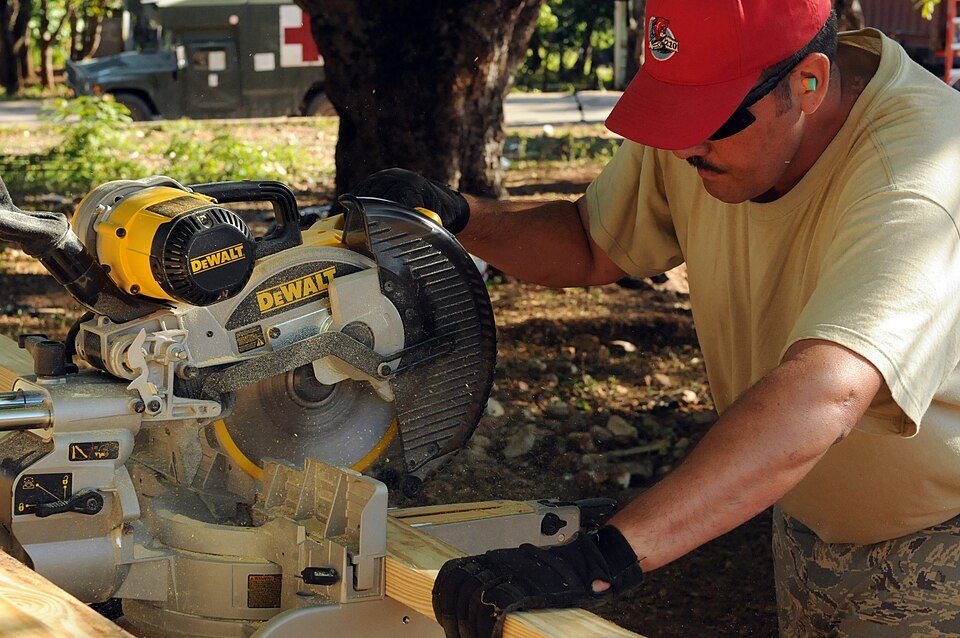
A miter saw is a powered chop saw that makes clean, accurate crosscuts at set angles. It's used for frames, molding, trim and similar work.
Miter saws can make:
Angle Cuts On The Wood’s Face
These are miter cuts: the blade swings left or right across the face of the board. On a picture frame, they are the 45-degree cuts where the four corners join.
Bevel Cuts On The Wood’s Edge
These are bevel cuts: the blade tilts so the cut angles through the board's thickness. Crown molding and angled trim joints use them. (The recess that holds the picture in a frame is a rabbet, which is cut on a router or table saw, not a miter saw.)
Now that you understand beveling, let's compare single and double bevel saws.
Single Bevel
The blade tilts one way, so for some cuts you flip the workpiece, which slows you down. On the bright side, these saws are simpler, lighter and cheaper.
Double Bevel
The blade tilts both ways, so you can cut mirror-image bevels without flipping long or awkward pieces. That is faster and helps accuracy on crown molding and trim, but the saws cost more. Many trim carpenters prefer them.
Which Type of Miter Saw Do You Really Need?
Do you need a single or dual type? The gadget lover in you will insist on the dual type. Let's get real for a second, though.
How often will you use this tool? If the answer is daily, get the dual type. If it's a few times a year, a single bevel saw is likely enough.
Why?
A dual bevel saw costs more, and it's big and takes up a fair amount of space in your workshop. For occasional simple angle cuts, even an inexpensive hand miter box can do the job.
It won't give you bragging rights, but the money you save can go toward other tools.
A circular saw with a speed square can also cut angles. It takes more care, but it's doable.
I'll admit, I do have a dual bevel saw. In my defense, I use it often for molding, door trim and other household projects.
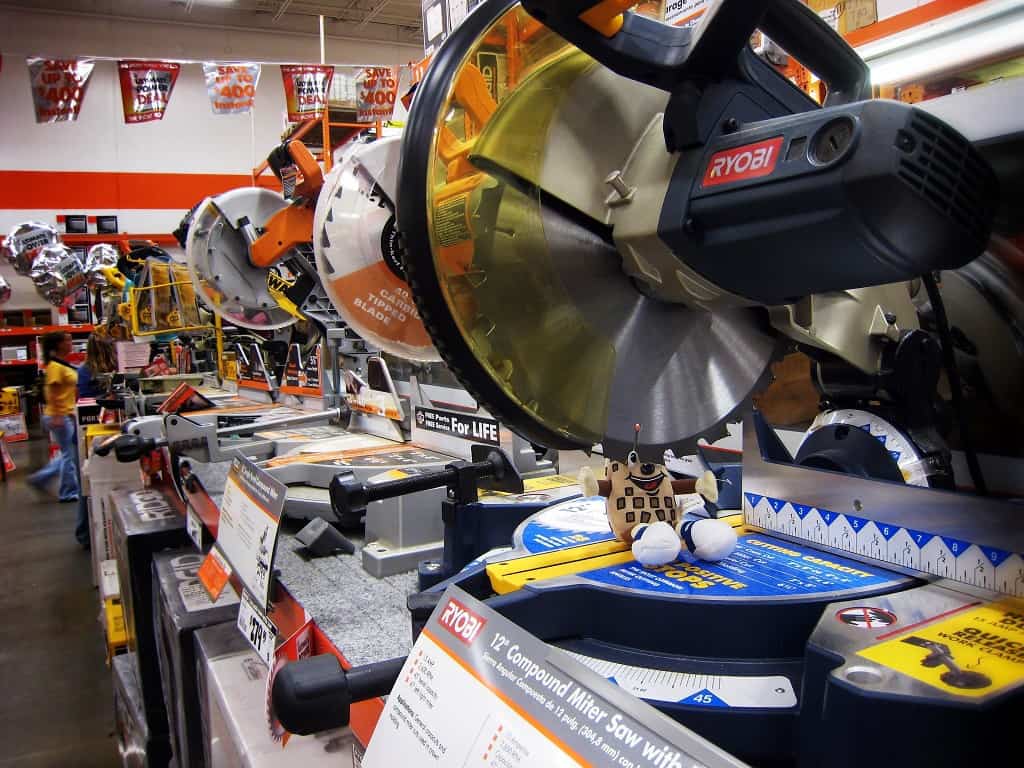
I use a 12-inch model because it gives me the most capacity and plenty of power for thick hardwood. For finer cuts, I switch to a 12-inch blade with more teeth.
Naturally, the 12-inch model is bigger and costs more. If you have a small workshop or work on smaller projects, a 7-1/4-, 8-1/2- or 10-inch model may suit you better. Smaller saws have less cutting capacity, and you can't fit a larger blade.
Does Brand Matter?
Does the brand make a big difference here? I'd say it does. Stick to reputable brands with power tools, especially with a tool that can seriously injure your hands.
Reputable brands such as Metabo HPT (formerly Hitachi) sell refurbished saws at lower prices, so there's little reason to choose an unknown brand.
Whether you're buying a reconditioned saw or a high-end DeWalt, you're making an investment. A cheap, poorly made miter saw often means:
- You'll be frustrated by the performance
- Your cutting abilities will be restricted to a smaller piece of softwood
- You can overstrain and blow the motor easier. As Murphy’s Law dictates, this will usually happen just as the warranty has expired.
- You'll struggle to claim against the warranty.
Spend a bit more upfront. Choose well, and the saw can last for many years.
What signifies that you’re getting a good deal?
A Good Warranty
Most good manufacturers offer a one- to three-year warranty on miter saws. Anything over that is a bonus. Be wary of very short warranties. If a company won't stand behind its product for more than six months, that tells you something.
Useful Features
Do the features add value, or are they just there to pump up the price? A laser or LED cut line is nice, but not essential. Extendable table wings and a good clamp, on the other hand, come in handy.
Cost of Consumables
What do replacement blades cost? How often will you need to replace them? Can they be sharpened? These are all good questions to ask.
Types of Single- and Dual-Bevel Miter Saws
Miter saws fall into three basic types:
Compound
A standard compound miter saw can miter and bevel, but usually tilts in one direction only (single bevel). For some cuts, you'll turn the workpiece around to change the direction of the bevel.
Double-Bevel
These tilt in both directions, which makes mirror-image bevels on both sides much simpler.
Sliding
Both types come in sliding versions. The saw head is mounted on rails, so it can slide through a cut. That lets you crosscut much wider boards than a non-sliding saw of the same blade size.
For maximum versatility and convenience, a sliding, double-bevel miter saw is hard to beat. Whether you choose a 10- or 12-inch model is up to you.
A plus of the 10-inch model is that 10-inch blades also fit most table saws, so you can share or stock one blade size. Check the arbor size and the blade's RPM rating first.
The 12-inch model is a beast of a machine. It takes up more space but has all the capacity a pro might need.
As a compromise, consider a 10-inch sliding compound miter saw. You get a good balance of value and capacity, and it's more than enough machine for most DIYers.
Whatever you choose, follow OSHA's woodworking machinery rules: keep guards in place, clamp the work, and let the blade stop before lifting the head.
Final Thoughts
All things being equal, it makes sense to stick to the DeWalt DWS780 if you'll use it frequently. If not, save space and money and look into the Metabo.
The downside of the DeWalt is that it's expensive and bulky. It's an investment that takes up a fair amount of space. Frankly, it's more machine than most DIYers need, but it gives you awesome bragging rights.