
Reciprocating Saw vs Jigsaw: Which Should You Buy?
Contents
- Our Top Reciprocating Saws Are:
- 1. Milwaukee 6538-21 Super Sawzall: First Choice
- 2. DEWALT DWE305 12 Amp Corded Reciprocating Saw
- 3. Makita JR3050T Reciprocating Saw
- Our Top Jigsaws Are:
- 1. Bosch JS470E Jigsaw: First Choice
- 2. DEWALT DCS331B Jigsaw
- 3. Ryobi’s One+ P523 18 volt T Shank Jigsaw
- Reciprocating Saw VS Jigsaw: Here is the Big Difference
- Buying Guide
- Power
- Weight
- Motor Speed
- Blade Change
- Ergonomics
- Final Thoughts
- Sources
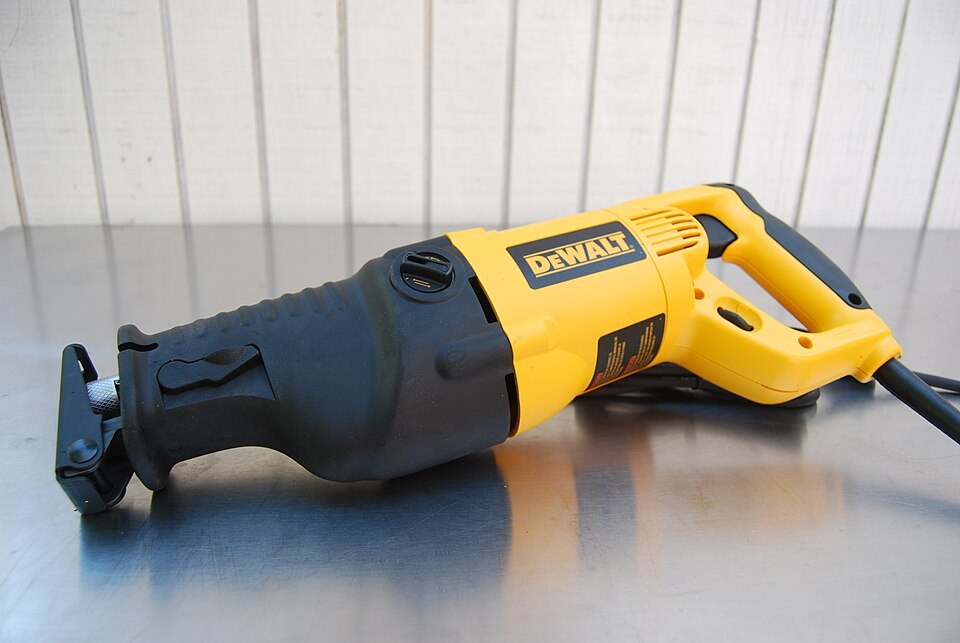
Photo by Charles & Hudson, CC BY-SA 2.0, via Wikimedia Commons
If you are buying your next handheld power saw, it may come down to a reciprocating saw vs a jigsaw.
The two look related because both move a blade back and forth. But they are built for different jobs.
A reciprocating saw is a rough cutter for demolition, pruning, and cutting through pipe and nails. A jigsaw is a precision tool for curves and cutouts in wood and sheet goods. Here is how to pick the right one.
OUR TOP PICK
In the reciprocating category, the Milwaukee 6538-21 Super Sawzall is our top choice. It is a heavy-duty 15 AMP saw built for tough demolition cutting.
Our Top Reciprocating Saws Are:
| Product | Details | ||
|---|---|---|---|
| 1. Milwaukee 6538-21 Super Sawzall | 1. Milwaukee 6538-21 Super Sawzall Top Pick | - 15 AMP - Counterbalance mechanism - Gear protecting clutch - Corded-electric | Check Current Price |
| 2. DEWALT DWE305 12 Amp Corded Reciprocating Saw | 2. DEWALT DWE305 12 Amp Corded Reciprocating Saw | - 12 AMP - 0-2,900 SPM - 1-1/8-inch stroke - Corded-electric | Check Current Price |
| 3. Makita JR3050T Reciprocating Saw | 3. Makita JR3050T Reciprocating Saw | - 11 AMP - Variable speed - Tool-less blade change - Corded electric | Check Current Price |
1. Milwaukee 6538-21 Super Sawzall: First Choice
Our first pick in the reciprocating saw category is this Milwaukee 6538-21 Super Sawzall. It is a 15 AMP corded saw built for heavy demolition. Milwaukee says it has overload protection to help keep the motor from burning out under heavy loads.
Big reciprocating saws vibrate a lot. Milwaukee's patented counterbalance mechanism reduces that vibration, which makes long cuts less tiring.
According to Milwaukee's product page, a patented gear protecting clutch absorbs the shock when the blade suddenly binds, which extends gear and motor life. The Quik-Lok blade clamp makes blade changes fast.
Specs
- 15 AMP motor
- Counterbalance mechanism
- Gear protecting clutch
- Corded-electric
Pros
- Ideal even for the toughest jobs
- Designed to last
- Sold with a carrying case
- Long warranty
Cons
- You need to be close to your power source
Rating – 4.5/5.0 stars
2. DEWALT DWE305 12 Amp Corded Reciprocating Saw
Coming close to the first pick is the DEWALT DWE305 12 Amp Corded Reciprocating Saw. It is rugged and a bit lighter than the Milwaukee, with a slightly less powerful 12 AMP motor.
According to DEWALT's product page, it runs at up to 2,900 strokes per minute with a 1-1/8-inch stroke length. A variable-speed trigger lets you start cuts slowly.
The keyless, lever-action blade clamp makes blade changes quick. It holds the blade in four positions, so you can flip the blade for flush cuts. DEWALT backs it with a 3-year limited warranty.
Specs
- 12 AMP motor
- 0-2,900 SPM, 1-1/8-inch stroke
- Corded-electric
Pros
- Compact and light
- Balanced for easy operations
- Durable
- Ergonomic design
Cons
- Doesn’t come with a case
Rating – 4.7/5.0
3. Makita JR3050T Reciprocating Saw
Reciprocating saws are usually built for tough demolition. The Makita JR3050T is rugged too, but it is light and controllable enough for smaller jobs, which makes it a good fit for both pros and DIYers.
It runs on an 11 AMP motor, which is enough for most remodeling work. A variable-speed trigger lets you slow the blade down for metal or for starting a cut.
At about 7.3 pounds, it is lighter than many corded reciprocating saws, so it is less tiring to use overhead. It also has tool-less blade changes and a comfortable handle.
Specs
- 11 AMP motor
- About 7.3 pounds
- Corded electric
Pros
- Comes with a tool-less blade changing system
- Can be used on a wide range of products
- Designed to last
- Easy to use
Cons
- Not suitable for fine angle cuts
Rating – 4.6/5.0
Among the jigsaws, we loved the Bosch JS470E because of its unique design, top-rated features, and unmatched performance.
OUR TOP PICK
Among the jigsaws, we loved the Bosch JS470E because of its unique design, top-rated features, and unmatched performance.
Our Top Jigsaws Are:
| Product | Details | ||
|---|---|---|---|
| 1. Bosch JS470E Jigsaw | 1. Bosch JS470E Jigsaw Top Pick | - 7.0 AMP - Up to 3,100 SPM - 4 orbital settings - Corded electric | Check Current Price |
| 2. DEWALT DCS331B Jigsaw | 2. DEWALT DCS331B Jigsaw | - 20V MAX - 0-3,000 SPM - 4 orbital settings - Battery-powered | Check Current Price |
| 3. Ryobi’s One+ P523 18 volt T Shank Jigsaw | 3. Ryobi’s One+ P523 18 volt T Shank Jigsaw | - 18V ONE+ - Up to 3,000 SPM - T-shank blades - Battery-powered | Check Current Price |
1. Bosch JS470E Jigsaw: First Choice
One word that describes the Bosch JS470E Jigsaw is "smooth." It is known for low vibration and straight, controlled cuts.
Low vibration matters when you have a lot of cutting to do. The rubberized top handle is comfortable for long sessions, and you can steady the saw with your other hand on the body for better control.
Its 7.0 AMP motor delivers up to 3,100 strokes per minute (SPM), with four orbital settings. A lock-on switch lets you hold a speed without squeezing the trigger the whole time.
Specs
- 7.0 AMP motor
- Up to 3,100 SPM
- Corded electric
Pros
- Changing the saw blade is easy and fast
- Low vibration
- Accurate
- Durable
Cons
- Pricey
Rating – 4.75/5.0
2. DEWALT DCS331B Jigsaw
If most of your work happens away from an outlet, you need a powerful cordless jigsaw, such as the DEWALT DCS331B Jigsaw. With no cord to drag, it is easier to maneuver around a workpiece.
The DCS331B product page lists variable speed up to 3,000 strokes per minute (SPM) and four orbital settings. It runs on DEWALT's 20V MAX batteries.
It is a sturdy saw, and DEWALT backs it with a 3-year limited warranty. Note that the DCS331B is sold as a bare tool; the battery and charger are extra.
Specs
- 20V MAX battery platform
- 0-3,000 SPM, 4 orbital settings
- Battery-powered
Pros
- Cordless
- Compact and easy to use
- Long warranty
Cons
- The dust management system is poor
- You buy a charger and battery separately
Rating – 4.8/5.0
3. Ryobi’s One+ P523 18 volt T Shank Jigsaw
The Ryobi One+ P523 is an affordable cordless jigsaw on Ryobi's 18V ONE+ battery platform. It reaches up to 3,000 strokes per minute (SPM), which handles most wood and sheet goods.
Its compact size makes it easy to use in tight spots.
A built-in dust blower clears the cut line so you can follow your mark, which helps on bevel cuts. Ryobi has updated this model over the years, so check the current version before you buy.
Specs
- 18V ONE+ battery platform
- Up to 3,000 SPM
- Battery-powered
Pros
- Dust blower keeps the cut line clear
- Compact and light
- Ergonomic design
- Designed to last
- Cordless
Cons
- Only uses T-shank blades
- You must change the battery when the charge runs low
Rating – 4.7/5.0
Reciprocating Saw VS Jigsaw: Here is the Big Difference
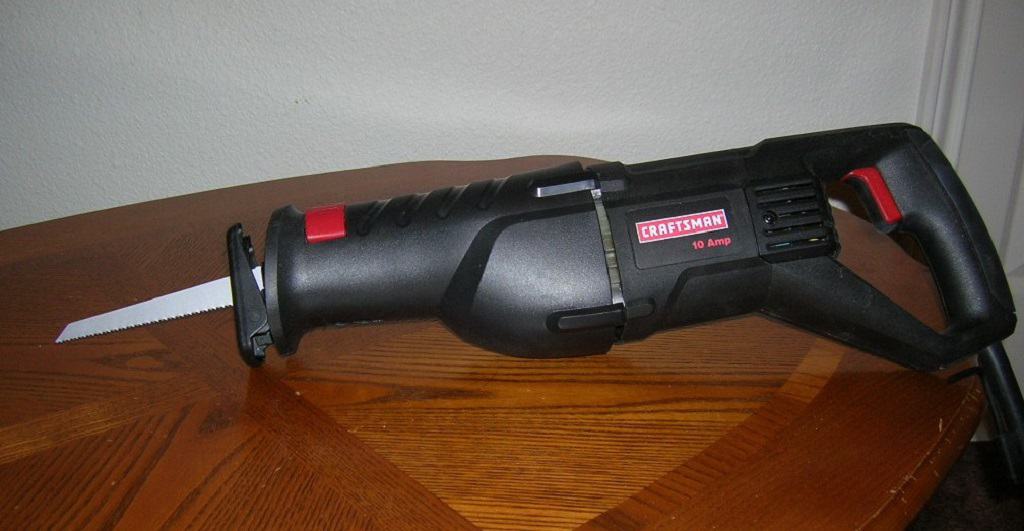
A reciprocating saw, often called by Milwaukee's trade name "Sawzall," is a strong handheld saw for tough cutting. It has a powerful motor and long, stiff blades that stick out the front of the tool.
That is why remodelers, electricians, and plumbers use it for demolition. With the right blade, it cuts wood with nails in it, drywall, plastic pipe, and metal pipe. It is a rough cutter for jobs where precision is not a priority.
Before you cut into a wall, floor, or ceiling, turn off power to the circuits at the breaker and check for hidden wires and pipes. Wear eye protection, and let the shoe rest against the work to control vibration.
A jigsaw also uses a reciprocating blade, but it is smaller and less powerful. Its short, thin blade points down through a base plate, which makes it ideal for precise cuts.
A jigsaw can make curves, inside cutouts (with a plunge cut or starter hole), crosscuts, rips, and bevel cuts. That makes it useful in workshops that handle many kinds of projects.
Buying Guide
Now that you have checked our best reciprocating and jigsaw picks, we will now look into the features that make these power tools better. This guide will help you understand what to look for and make an informed decision on which one to buy.
Power
The power of most jigsaws and reciprocating saws is rated in amperes. However, if they are battery powered, the rating is in volts. Here, you need to think about the cutting tasks that will be done with the tool and the anticipated toughness. If you have a lot of cutting tasks or tough workpieces, consider going for the more powerful models.
Weight
Because reciprocating saws and jigsaws are handheld tools, weight is another crucial factor to consider. If the tool is very heavy, there is a danger of getting fatigued and taking longer to complete your cutting tasks.
Therefore, you should look for a model that is light enough without compromising its performance.
Motor Speed
Blade speed is measured in strokes per minute (SPM). Most corded models top out around 2,800 to 3,100 SPM. Variable speed matters more than the top number, because slower speeds give more control in metal and on curves.
Blade Change
When you are using a reciprocating saw or jigsaw, you will no doubt need to change the blade at some point. The best saw should allow you to change the blade as fast as possible without incurring significant downtime.
Look for tool-free blade clamps that let you swap blades without an Allen key. Always unplug the saw or remove the battery first, as OSHA advises for any blade change.
Ergonomics
When selecting a handheld tool such as a reciprocating or jigsaw, you need to put a lot of focus on ergonomics. This means that the power tool should be easy to handle and use. Ergonomic features to look for include rubberized handle, press-and-lock switch, and vibration dampening system.
Final Thoughts
This reciprocating saw vs jigsaw comparison has revealed that the two models come with a number of similarities, but they are meant for different jobs. The reciprocating saws are big, strong, and work best when you need to complete tough cutting, such as demolitions, which do not require a lot of precision.
On the other hand, jigsaws are smaller, lighter, compact, and work best where precision is needed. So, you better look at the nature of the task at hand and pick the perfect tool.
All six saws in this comparison are solid choices. Our favorites are the Milwaukee 6538-21 Super Sawzall for reciprocating saws and the Bosch JS470E among the jigsaws.
Sources
- 6538-21 15.0 Amp Super Sawzall Recip Saw, Milwaukee Tool
- DWE305 12 Amp Corded Reciprocating Saw, DEWALT
- DCS331B 20V MAX Jig Saw, DEWALT
- Hand and Power Tools (OSHA 3080), OSHA
.jpg)