Miter Saw vs. Circular Saw: Which One Do You Buy?
Contents
- Our Top Circular Saws Are:
- 1. Dewalt 7-¼ Inch Circular Saw
- 2. Makita SP6000J1 Circular Saw
- 3. Rockwell RK3440K Circular Saw
- Our Top Miter Saws Are:
- 1. Hitachi C10FC2 Compound Miter Saw
- 2. Festool 561287 Sliding Compound Miter Saw
- Circular Saw vs Miter Saw: Defining Each Type of Tool
- What is a Circular Saw?
- What is a Miter Saw?
- A Full Breakdown of The Top-Reviewed Miter Saw vs Circular Saw Tools
- Guide to Different Product Variations & Models
- Final Thoughts
- Sources
Any woodworking project goes better with the right tools. Miter saws and circular saws are two of the most useful saws for carpenters and woodworkers, whether DIYers or professionals.
Good tools help you finish projects faster and more accurately. But more goes into choosing the right saw than price.
This article explains the differences between a miter saw and a circular saw, then reviews the models we recommend.
OUR TOP PICK
When it comes to circular saws, we like the Makita SP6000J1. It is a plunge-cut track saw that rides on a guide rail, which makes it great for straight, clean cuts in plywood and other sheet goods.
Our Top Circular Saws Are:
| Product | Details | ||
|---|---|---|---|
| 1. Dewalt 7-¼ Inch Circular Saw | 1. Dewalt 7-¼ Inch Circular Saw | - Powerful tools - Compact design - Electric brake - 15 amp motor | Check Current Price |
| 2. Makita SP6000J1 Circular Saw | 2. Makita SP6000J1 Circular Saw Top Pick | - Powerful 12 amp motor for optimum performance - Electronic speed control - Large cutting capacity | Check Current Price |
| 3. Rockwell RK3440K Circular Saw | 3. Rockwell RK3440K Circular Saw | - 4 amp motor - Multi-functional - Ergonomic design with a slim grip handle - Built-in laser | Check Current Price |
1. Dewalt 7-¼ Inch Circular Saw
This DeWalt is one of the most popular corded circular saws, and for good reason. It is light for a 15 amp saw, at 8.8 pounds according to the DWE575SB product page. It bevels up to 57 degrees, and an electric brake stops the blade after you release the trigger.
Specs
- Powerful tools
- Compact design
- Electric brake
- 15 amp motor
- Integrated dust blower
Pros
- Provides accurate and safe cuts
- Suitable for tough jobs
- Lightweight
- Speed brake works great
Cons
- Fence measurement guide is off
Conclusion
DeWalt has a strong reputation for quality, and this saw is no exception. It suits both professional and casual projects.
Overall Rating – 5 out of 5
2. Makita SP6000J1 Circular Saw
The Makita SP6000J1 is a 6-1/2-inch plunge saw with a 12 amp motor and variable speed from 2,000 to 5,200 RPM. Makita includes a 55-inch guide rail, which turns it into a portable alternative to a table saw for breaking down sheet goods. Pieces narrower than the guide track can be tricky to cut.
Specs
- Powerful 12 amp motor for optimum performance
- Electronic speed control
- Large cutting capacity
Pros
- Suitable for a wide variety of materials
- Delivers a splinter-free mirror finish
- Provides smooth cutting
Cons
- Maximum cut depth is 2-3/16 inches at 90 degrees, less than a 7-1/4-inch saw
Conclusion
With this Makita saw, sheet goods and long rips are easier and cleaner.
Overall Rating – 4.5 out of 5
3. Rockwell RK3440K Circular Saw
The Rockwell is a compact, lightweight saw with a small blade. With the right blade, it cuts wood, plastic, thin aluminum, and ceramic tile. It has a dust port to help keep the work area clean.
Its small 4 amp motor limits it to thinner materials, and you may need to push harder than with a full-size saw. Wear eye protection, and use a dust mask when cutting tile.
Specs
- 4 amp motor
- Multi-functional
- Ergonomic design with a slim grip handle
- Built-in laser
Pros
- The motor is more powerful than you think
- Cuts a wide variety of materials
- Handle improves grip and control
- Safe and easy cuts
Cons
- Gets clogged easily
Conclusion
It is a handy compact saw for light cutting and small projects, but not a replacement for a full-size circular saw.
Overall Rating – 4.5 out of 5
OUR TOP PICK
The Hitachi C10FC2 is one of our favorite miter saws. This saw is versatile, with a powerful motor and a comfortable handle that makes it easier to use.
Our Top Miter Saws Are:
| Product | Details | ||
|---|---|---|---|
| 1. Hitachi C10FC2 Compound Miter Saw | 1. Hitachi C10FC2 Compound Miter Saw Top Pick | - 15 amp motor - 0 to 52-degree miter angle range - 0 to 45-degree bevel range - Large extended flip fence | Check Current Price |
| 2. Festool 561287 Sliding Compound Miter Saw | 2. Festool 561287 Sliding Compound Miter Saw | - Rail forward design for increased precision - Micro-adjustable bevel angle - Dust extractor - Angle transfer device | Check Current Price |
1. Hitachi C10FC2 Compound Miter Saw
This 10-inch compound miter saw has a 15 amp motor that spins the blade up to 5,000 RPM. It miters 0 to 52 degrees left and right and bevels 0 to 45 degrees to the left. It is easy to use and affordable, though assembly takes some patience.
Hitachi power tools are now sold under the Metabo HPT name. The current version of this saw is the Metabo HPT C10FCGS, which has the same 15 amp motor, 5,000 RPM, and miter and bevel ranges.
Specs
- 15 amp motor
- 0 to 52-degree miter angle range
- 0 to 45-degree bevel range
- Large extended flip fence
- Large table for better material support
Pros
- Extremely versatile
- Powerful motor
- Comfortable handle
- Easy to use and control
Cons
- Poor assembly instructions
- Complicated to set up
Conclusion
Despite its poor instructions, it is an excellent choice for home use.
Overall Rating – 4.5 out of 5
2. Festool 561287 Sliding Compound Miter Saw
This sliding compound miter saw is the Festool Kapex KS 120, and it is known for precise cuts. It works in the shop or on site. It has micro-adjustable bevels, easy-to-read scales, dual laser guides, and quick-release fences.
Festool has since updated the Kapex line, so check whether the listing is the original KS 120 or a newer version.
Specs
- Rail forward design for increased precision
- Micro-adjustable bevel angle
- Dust extractor
- Angle transfer device
Pros
- Compact
- Dual laser technology
- Time-saving features
- Advanced dust extraction
Cons
- Not suitable for heavy commercial use
Conclusion
This tool performs well, as expected from Festool. It is a big investment, so it makes most sense for trim carpenters and serious hobbyists.
Overall Rating – 4.0 out of 5
Circular Saw vs Miter Saw: Defining Each Type of Tool
Which one should you buy, and do you need both? Each saw has its own strengths and uses.
Many woodworkers own both. If you can only buy one, pick the one that matches most of your cuts.
If your project involves a lot of crosscutting and trim, get a miter saw. If you need to rip boards or cut plywood, a circular saw is the better option.
What is a Circular Saw?
A circular saw is a handheld saw with a round, spinning blade. With the right blade, it cuts wood, plywood, plastic, and some metals. You can find both corded and cordless models.
Circular saws are versatile and relatively inexpensive.
Pros
- Best for straight cuts
- Versatile power saw
- Efficient and cost-effective
Cons
- Harder to make precise angle cuts; can't cut curves
- Rougher edge than a miter saw unless you use a fine blade and a guide
What is a Miter Saw?
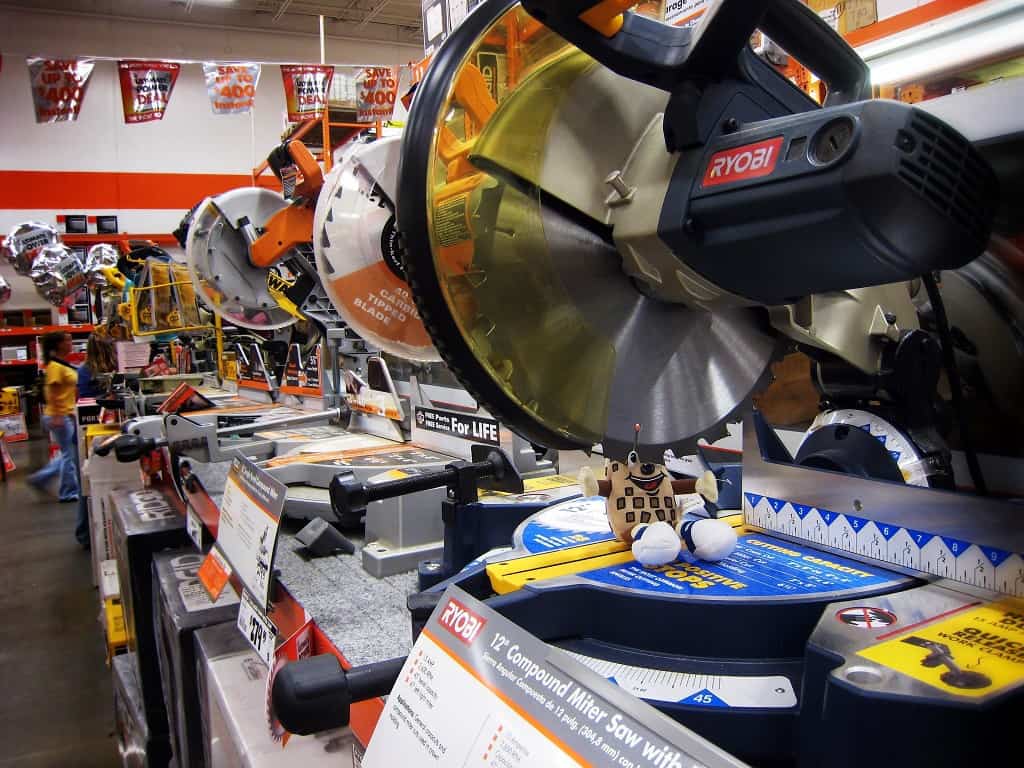
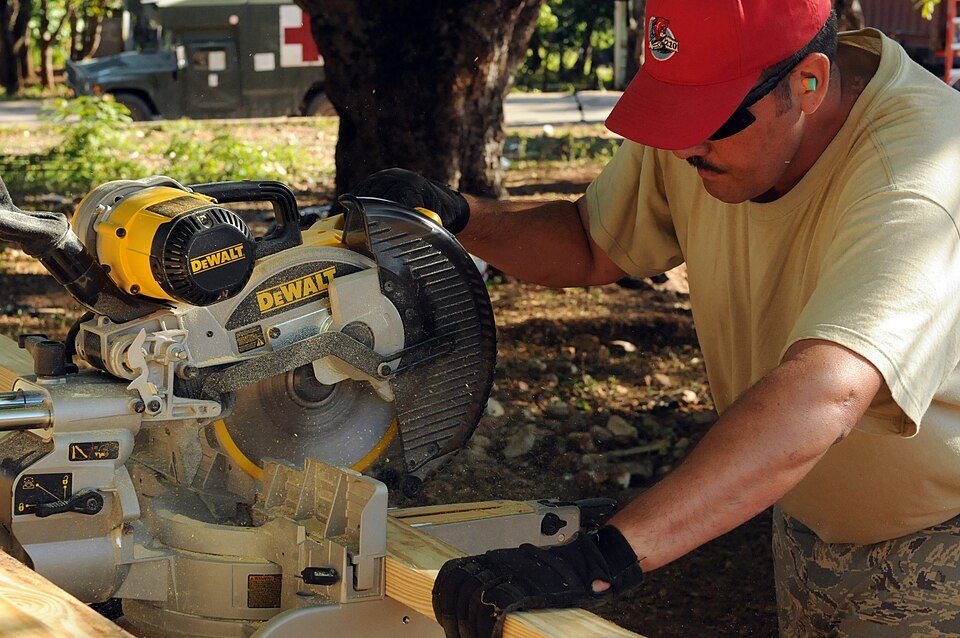
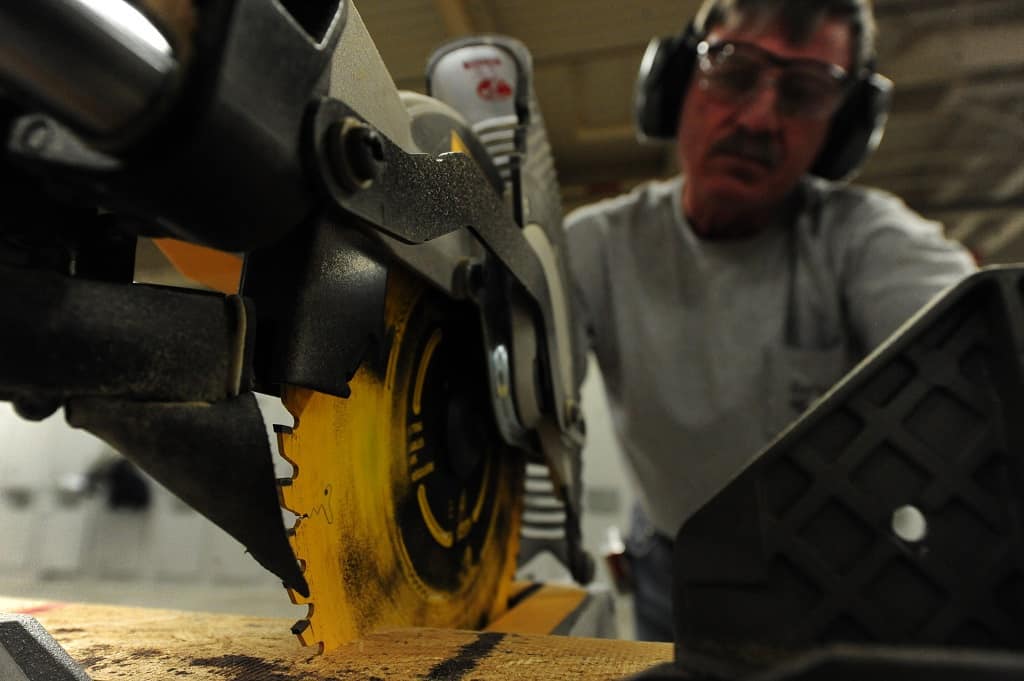
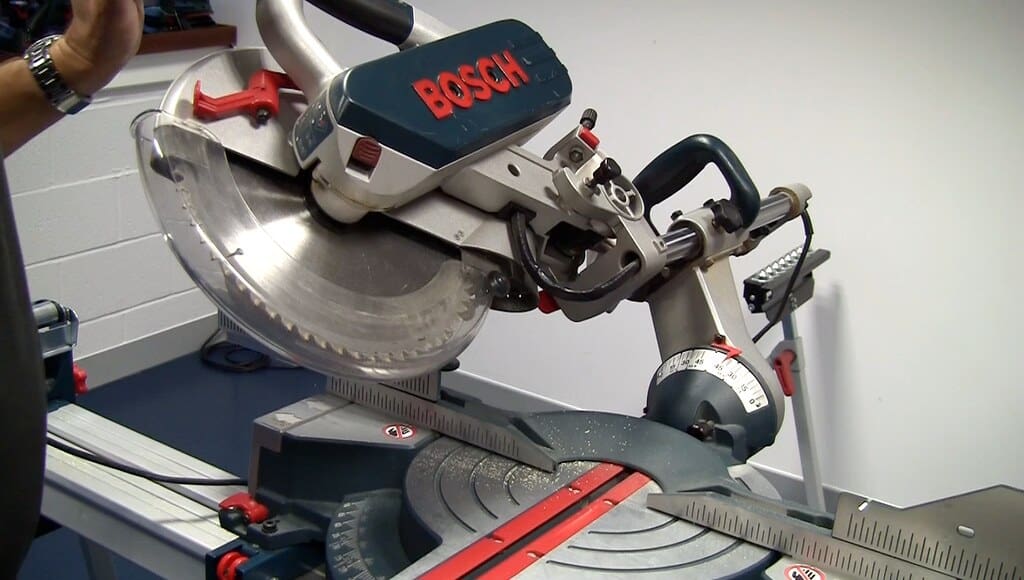
Miter saws are stationary saws designed for precise crosscuts and angled cuts. A "miter" is an angled cut across the face of a board, such as the 45-degree cuts at the corner of a picture frame.
Like circular saws, miter saws use a round spinning blade. The difference is that the blade is mounted on a pivoting arm above a table and fence, so angled cuts are fast and repeatable.
Pros
- Make accurate cuts
- Cuts trim for windows, doors, baseboards, and crowns
- Saves time
- Can cut bevels
Cons
- Specialized use
- Expensive
- Needs more space in the workshop
When comparing a circular saw vs. a miter saw, the biggest difference is how the cut is made. With a miter saw, the board stays still against the fence and you bring the blade down through it. With a circular saw, you guide the saw along the board.
A circular saw is the more all-around tool. You can rip, crosscut, and cut sheet goods on a wide range of projects. A miter saw is a specialty machine for crosscuts and angles.
Never use a miter saw to rip boards along their length. Miter saw manuals tell you to hold the workpiece still against the fence and not to feed it into the blade or cut freehand.
A Full Breakdown of The Top-Reviewed Miter Saw vs Circular Saw Tools
You probably want a quality miter or circular saw that makes accurate cuts and handles wide material. In other words, you want the most versatile, best-built saw for the money.
Hitachi (now Metabo HPT), Makita, and DeWalt are some of our top choices.
Hitachi tools, now sold as Metabo HPT, are popular with professionals and DIYers. The brand makes high-quality miter saws at affordable prices.
Makita is known for powerful, lightweight circular saws. Its track saws run on a guide rail for straight, accurate cuts.
Two Makita models we like are the Makita SP6000J1 plunge saw and the Makita 5007MG 7-1/4-inch sidewinder. The 5007MG has the deeper cut of the two.
DeWalt tools are some of the easiest to use. Like most major power tool brands, DeWalt builds many of its tools overseas, including in countries such as China, and others in the United States. Either way, you get a durable and powerful tool.
Guide to Different Product Variations & Models
Circular saws come in three main types: in-line (sidewinder), worm drive, and hypoid.
The in-line or sidewinder circular saw is the most common type. The motor sits beside the blade, which keeps the saw lighter and shorter. Another plus is the possibility of going cordless.
Worm drive saws are longer and narrower than sidewinder saws, with the motor behind the blade. The gearing gives them high torque for framing, and the length helps on long rips. The Skilsaw SPT77WML is a well-known example. (The Makita SP6000J1 is not a worm drive saw; it is a direct-drive plunge saw.)
Hypoid saws are similar in layout to worm drive saws but use hypoid gears. Unlike most worm drives, hypoid machines have a sealed, oil-bath gear case.
Miter saws come in three main types: standard miter saws, compound miter saws, and sliding compound miter saws.
Standard miter saws are the simplest. They pivot left and right, usually to 45 degrees or more, for miter cuts.
Compound miter saws also tilt the blade for bevel cuts, so you can cut a miter and a bevel at once. Single-bevel saws tilt one way, usually left. Dual-bevel saws tilt both ways, which saves time on crown molding.
Standard and compound saws pivot down on a fixed arm, which limits how wide a board they can cut. Sliding miter saws mount the motor on rails, so the blade can also move in and out to cut wider boards.
Final Thoughts
If you can only fit one saw in your workshop, start with the cuts you make most.
The DeWalt circular saw is versatile and powerful, and it handles most cutting jobs. For miter saws, the Hitachi (now Metabo HPT) is a strong value.
Read the reviews above to decide first whether you need a circular saw or a miter saw, then which model fits your projects.
Many woodworkers end up owning both.
Sources
- SP6000J1 6-1/2" Plunge Circular Saw, Makita
- 10" Compound Miter Saw C10FCGS, Metabo HPT
- C10FCG Compound Miter Saw Owner's Manual, Metabo HPT
- DWE575SB 7-1/4 in. Lightweight Circular Saw, DEWALT