Champion Log Splitter Review: Will It Really Save You the Effort?
Contents
- Presenting The Champion 25-Ton Log Splitter
- Features and Benefits
- Impressive 25.ton Splitting Force
- Blazing Cycle Speed
- Dual Position Operation
- Effortless Operation and Transportation
- Things To Consider Before Buying A Hydraulic Log Splitter
- Power
- Price
- Ease of Use
- Speed
- General User Impressions
- Our Opinion
- Champion Log Splitter Review Summary
- Product FAQ
- Can The Champion 25-Ton Be Towed On A Highway?
- Does It Have An Electric Start?
- Does It Come With Hydraulic Fluid Or Engine Oil?
- Final Thoughts
- Sources
Tired of swinging that axe until your palms blister?
That’s a good thing. Because, now, you can decide to stop living in the medieval age and enter the civilized world of machines.
A hydraulic log splitter does the heavy work for you and splits far more wood per hour than an axe.
Today, we’ll get a feel of what it’s like to split some rounds on one of the best log splitters on the market, Champion 25-Ton Log Splitter.
It’s a heavy-duty gas machine that takes most of the labor out of splitting. The specs below come from Champion’s operator’s manual for its 25-ton full-beam model 100251, so confirm the model number on the listing before you buy.
Before the review, you should be in the know of some key areas to look out for when searching for a high-quality log splitter that rocks.
Hop on the ride!
Presenting The Champion 25-Ton Log Splitter
The Champion 25-ton Log Splitter absolutely takes the hassle out of wood splitting. It’s the ideal machine for the average homeowner to split all sorts of wood, even the dense ones included.
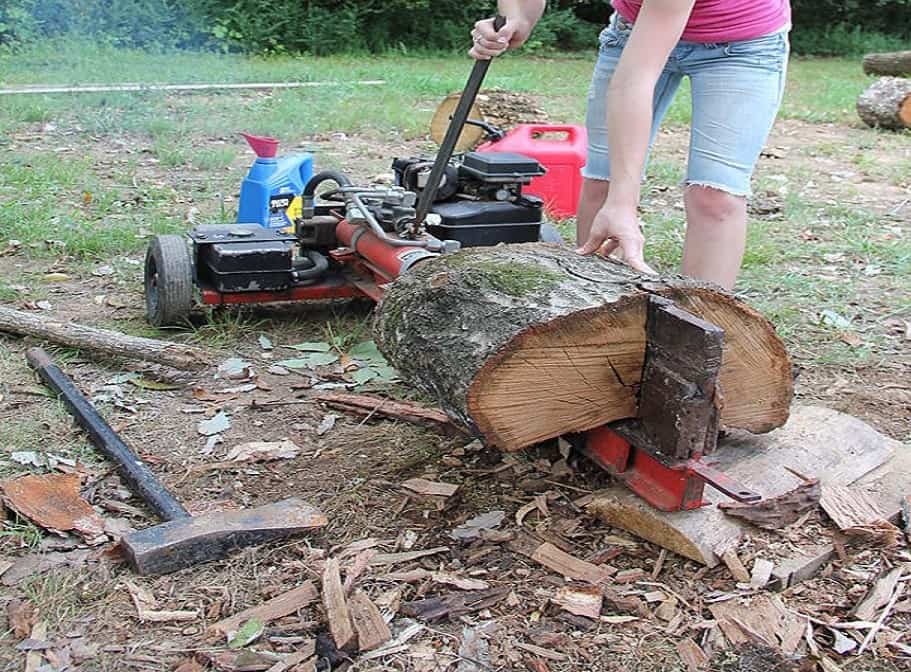
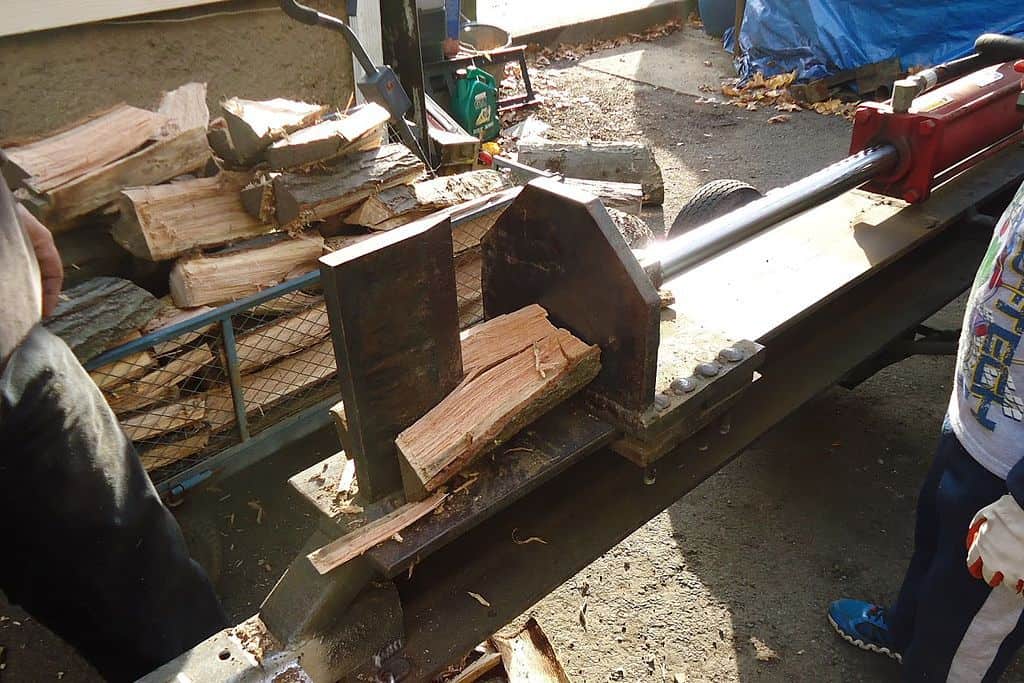
The horizontal position lets you work right at waist level with large log cradles on the side to catch split wood. Hence, you don’t have to bend much or crouch like with many log splitters.
In case you need to split massive logs, it seamlessly switches to an upright position that allows you to roll the log under the ram easily.
Expect some assembly, and plan for help moving the heavy parts. The splitter weighs about 430 pounds.
Features and Benefits
Ready to find out what sets the Champion 25-ton Log Splitter apart?
Here we go…
Impressive 25.ton Splitting Force
Twenty-five tons of ram force handles most firewood a homeowner will cut. Champion’s manual lists a maximum log length of 24 inches and a maximum log weight of 100 pounds.
Power comes from a 224cc OHV engine with recoil start.
Blazing Cycle Speed
Champion lists a 12-second cycle time for model 100251, and the ram returns automatically. That is typical for a 25-ton hydraulic splitter, not exceptional; some other Champion 25-ton models are rated at 11 seconds.
Dual Position Operation
To fully utilize its powerful splitting force, you can split wood in both horizontal and vertical positions. This way, you can break all sorts of wood sizes without much stress.
In the upright position, you can just roll a bigger log in place rather than lifting it unto the machine. A good thing about this feature is that it switches seamlessly between positions.
Effortless Operation and Transportation
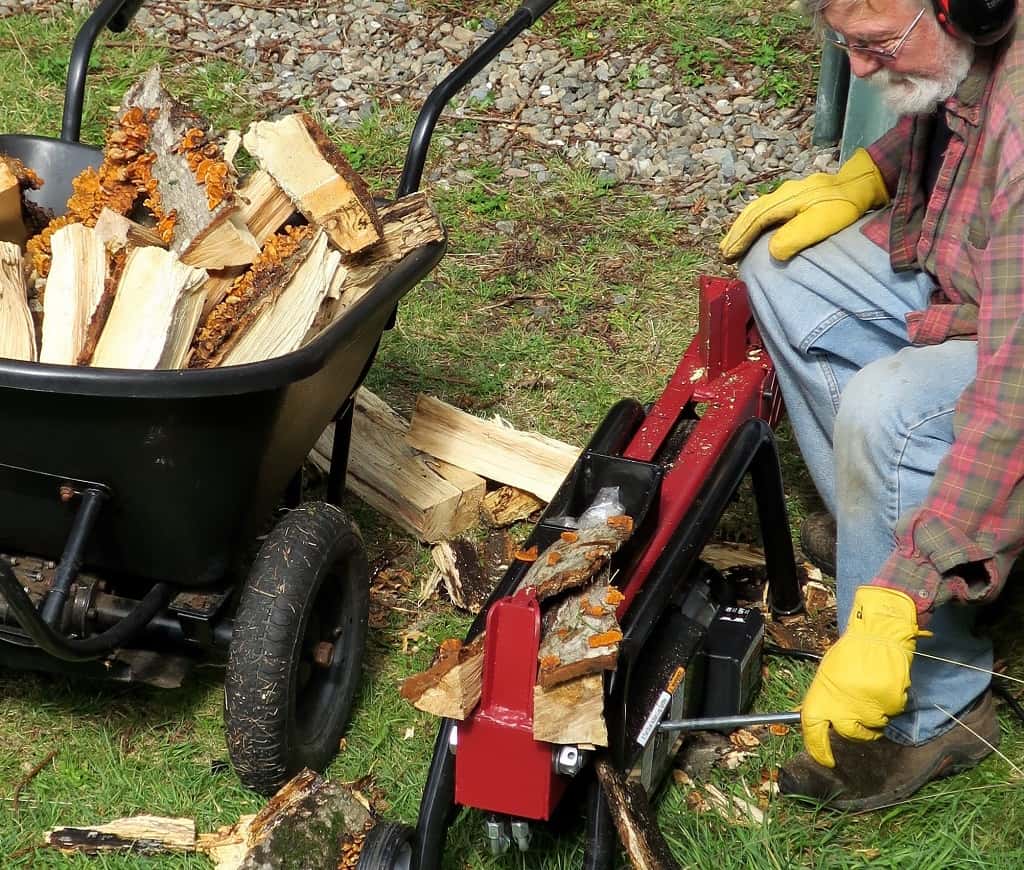
The splitter uses a single control lever. Do not use your free hand to steady or guide a round while the ram moves: Champion’s manual says to keep hands clear of the log and wedge during splitting and to hold logs only by the sides when loading.
Only one person should operate the splitter and load logs, and bystanders should stay at least 10 feet away. Log cradles on the sides catch split pieces, so you bend less.
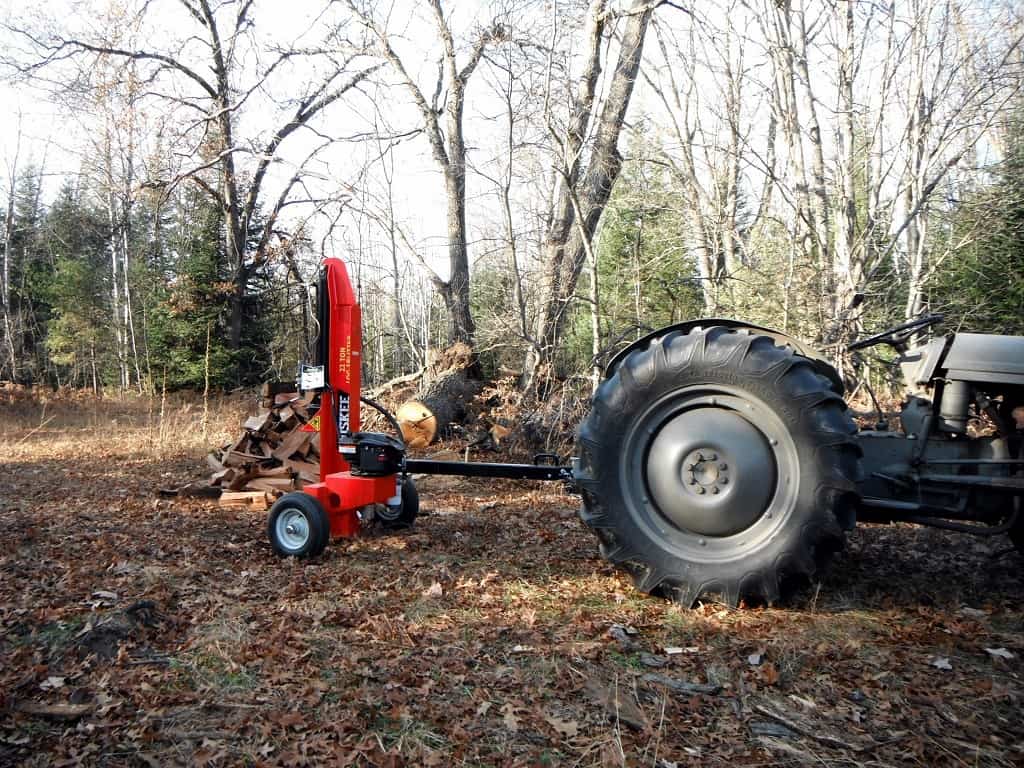
The splitter weighs about 430 pounds and has a 2-inch ball coupler for towing around your property.
Things To Consider Before Buying A Hydraulic Log Splitter
If you’re a newbie to machines or log splitters, you may feel overwhelmed by the sheer size of some splitters alone. Not to mention the particular features you’ll need to look for to get the best one for you.
The best splitter, even a manual log splitter, is the one that suits your wood, not the most powerful or expensive one. Here is what to consider:
Power
The focal point of power in a log splitter is its tonnage. This is the amount of pressure the machine applies to rounds to do a split.
If you buy an overpowered or underpowered product, you’ll either waste money or fail to split wood efficiently. Here are factors to consider to find a balance:
- Size of rounds or log diameter
- Green or seasoned woods
- Hardwood or softwood
As a rough guide, large-diameter, knotty, or green hardwood rounds call for 20 tons or more, and the toughest oak may need 30 tons.
If you only split small, seasoned rounds, a smaller electric splitter may be enough and is easier to store.
Needless to say, having an idea of wood type and its hardness can help you choose the right log splitter for you. You can use the Janka Hardness chart to find out where your wood type falls into.
Price
It’s a no brainer. Before you shop for any item, you need to set aside a budget. The same thing applies to a log splitter. The amount you set aside would determine the type of log splitter you can afford. For instance, a low budget may restrict your options to a manual log splitter or low-powered electric or gas splitter.
Gas splitters with high tonnage and features like log lifts cost the most. Smaller electric models cost far less. Check current prices, since they change often.
Ease of Use
The main goal of using a wood splitter is to work with comfort and speed. Getting one that’s difficult to operate, or not your style, will not only slow you down but also stress you out.
There are lots of factors in play here. From cycle speed, lever operation, splitting position, installation to mobility, these will determine how easy it would be to operate your splitter.
The splitting position for one is vital if you’d be splitting large logs or a large number of cords. Splitters with a vertical position allow you to split these types of woods without having to lift them. Most 20-ton and higher splitters have both vertical and horizontal splitting positions.
Speed
If speed is your priority, kinetic splitters cycle in a few seconds, while most hydraulic splitters take roughly 10 to 20 seconds.
Kinetic splitters usually cost more than hydraulic ones of similar capacity. Dense or knotty wood can slow any splitter down.
General User Impressions
Owners generally rate the Champion 25-ton well for value. It is a heavy-duty log splitter that handles most firewood, though very knotty rounds may take a second try.
Common praise covers the single-lever control and Champion’s US-based support. The most common complaint is handling the heavy parts during assembly.
Our Opinion
The Champion 25-Ton is a solid, fairly priced gas splitter. If you want a powerful and easy-to-operate log splitter for home firewood, it is a good option.
Champion Log Splitter Review Summary
Pros
- 25 tons of force splits most firewood up to 24 inches long
- 12-second cycle time
- 2-inch ball coupler; maximum towing speed of 45 mph
- Simple single-lever control
- Horizontal/vertical positions let you roll heavy rounds into place
- Heavy-duty steel construction
Cons
- Some owners find the instruction manual hard to follow
- Bark and debris collect on the engine and beam
- Some owners say the engine on/off switch is awkward to reach
Product FAQ
Can The Champion 25-Ton Be Towed On A Highway?
Usually not. Champion’s manual sets a 45 mph maximum towing speed and warns that towing on public streets is prohibited in most states or requires extra licensing or modifications.
Check with your local DMV. For road trips, haul the splitter on a trailer or truck instead.
Does It Have An Electric Start?
No. It uses a recoil (pull) start.
Does It Come With Hydraulic Fluid Or Engine Oil?
Check your listing and the manual before the first start. The manual specifies the type and amount of engine oil and hydraulic fluid, and running either dry can damage the machine.
Final Thoughts
That’s it, folks.
The end of the road on a ride with the Champion 25-Ton Log Splitter.
It combines 25 tons of force, a 12-second cycle, and horizontal or vertical operation at a fair price. Keep your hands clear of the wedge, follow the manual, and it will split a lot of firewood with little effort.
Sources
- Operator's Manual, Model 100251 25 Ton Full Beam Log Splitter, Champion Power Equipment
- Operator's Manual, Model 100326-1 25 Ton Full Beam Log Splitter, Champion Power Equipment