The Best Scroll Saw Blade Reviews: Options for Hardwood and Others
Contents
- The Best Scroll Saw Blades Are…
- 1. Olson Saw PG49802 - Best Scroll Saw Blades for Hardwood
- 2. Flying Dutchman Ultra Reverse - Best Scroll Saw Blades for Thick Wood
- 3. Bosch SS5-20
- 4. Skil 80182
- 5. Olson Saw FR49501
- 6. Pegas Modified Geometry Pinless Scroll Saw Blades
- Buying Guide
- Pinned or Pinless Blades
- Blade Type
- Teeth Per Inch (TPI)
- The Blade Material
- Brand
- Final Thoughts
- Sources
A scroll saw is only as good as its blade. Blades differ in end type (pinned or plain), tooth pattern, size and teeth per inch, and the wrong blade burns, wanders or splinters the wood.
Here are six blade packs worth considering, followed by a guide to choosing the right type and size.
OUR TOP PICK
The Olson Saw PG49802 is our top pick: Olson's precision ground (PGT) double/reverse tooth blades cut accurately and leave a clean underside.
The Best Scroll Saw Blades Are…
| Product | Details | ||
|---|---|---|---|
| 1. Olson Saw PG49802 | 1. Olson Saw PG49802 Top Pick | - Blade length: Five inches - Blade type: Double reverse tooth - Best in material 3/16 inch or thicker - Plain (pinless) end | Check Current Price |
| 2. Flying Dutchman Ultra Reverse | 2. Flying Dutchman Ultra Reverse | - Blade length: Five inches - Blade type: Ultra-reverse design - Cutting capacity: Designed for both hardwood and softwood - Pack quantity: 72 pieces | Check Current Price |
| 3. Bosch SS5-20 | 3. Bosch SS5-20 | - Cutting capacity: Hardwood and softwood - Pinless - Length of the blade: Five inches - Material: Steel | Check Current Price |
| 4. Skil 80182 | 4. Skil 80182 | - Blade length: Five inches - Cutting capacity: Hardwood, softwood and plastic - Pack quantity: 36 - Weight: 0.64 ounces | Check Current Price |
| 5. Olson Saw FR49501 | 5. Olson Saw FR49501 | - Blade type: Regular skip tooth design - Cutting capacity: 3/32-1 inch - Blade length: Five inches - Pack quantity: 18 pieces | Check Current Price |
| 6. Pegas Modified Geometry Pinless Scroll Saw Blades | 6. Pegas Modified Geometry Pinless Scroll Saw Blades | - Pack quantity: 6 dozen (72 blades) - Sizes 9, 7, 5, 3, 1 and 2/0 - Blade length: Five inches | Check Current Price |
1. Olson Saw PG49802 - Best Scroll Saw Blades for Hardwood
Olson's PGT blades have precision ground teeth, which cut faster and smoother than filed teeth. The double tooth pattern clears sawdust, and a few reversed teeth at the bottom reduce splintering on the underside.
Olson recommends its PGT double/reverse blades for accurate, tight-radius cuts in material 3/16 inch or thicker, which makes them a good fit for hardwood.
They are plain-end (pinless) blades, so they fit most modern scroll saws, but not older saws that take only pin-end blades. Precision ground blades are aggressive, so beginners should slow the feed rate until they get used to them.
Specs
- Blade length: Five inches
- Blade type: Double reverse tooth
- Best in material 3/16 inch or thicker
- Plain (pinless) end
Pros
- Cuts through hardwood fast and accurately
- Fits most modern (plain-end) saws
- Reverse teeth reduce underside splintering
Cons
- Aggressive for beginners
- Not for pin-end saws
2. Flying Dutchman Ultra Reverse - Best Scroll Saw Blades for Thick Wood
Flying Dutchman blades are a favorite of many scroll saw users. Their ultra reverse blades use a different arrangement of upward-facing teeth than standard reverse tooth blades.
The goal is to reduce splintering on the underside while still clearing sawdust, so cut edges need less sanding. The teeth are milled and the blades are hardened steel.
The pack holds 72 blades, enough to last a long time.
Specs
- Blade length: Five inches
- Blade type: Ultra-reverse design
- Cutting capacity: Designed for both hardwood and softwood
- Pack quantity: 72 pieces
Pros
- The blades are designed for precision and sharpness
- Delivers sharp cuts without splintering
- 72 blades in the pack
Cons
- Expensive
3. Bosch SS5-20
The Bosch SS5-20 is a small pack of identical 5-inch pinless blades with 20 teeth per inch. Twenty TPI is a fine tooth count that leaves a smooth edge in thin stock.
Because every blade in the pack is the same, it is a good refill if you already know this size works for your projects. Check the package for the materials Bosch lists; for metal, use a blade made for metal cutting.
Specs
- Cutting capacity: Hardwood and softwood
- 20 TPI, pinless
- Length of the blade: Five inches
- Material: Steel
Pros
- Excellent construction
- Sold affordably
- Fine 20 TPI teeth for smooth edges
- Works well with most scroll saws
Cons
- Small pack
- The blades in the pack have the same configurations
- Not effective for intricate cuts
4. Skil 80182
The Skil 80182 is a budget assortment of 36 five-inch blades in three tooth sizes, 12 of each. Five inches is the standard scroll saw blade length.
The mix lets you try fine and coarse blades on wood and plastic, which is useful when you are still learning which sizes you prefer. They work best for straighter cuts.
Specs
- Blade length: Five inches
- Cutting capacity: Hardwood, softwood and plastic
- Pack quantity: 36
- Weight: 0.64 ounces
Pros
- The blades fit and work with almost all universal scroll saws
- You get a mix of different types of cutting blades
- Can be used for cutting a wide range of materials
- Strong and durable
Cons
- Difficult to turn when cutting
5. Olson Saw FR49501
If you are a beginner, this Olson SAW FR49501 pack of skip tooth blades is a forgiving place to start. Skip tooth blades clear sawdust well and are less aggressive than precision ground blades.
The pack mixes several tooth counts, so you can cut thin and thick wood and plastic. Note that skip tooth blades still need you to turn the workpiece; only spiral blades cut in any direction.
Specs
- Blade type: Regular skip tooth design
- Cutting capacity: 3/32-1 inch
- Blade length: Five inches
- Pack quantity: 18 pieces
Pros
- The blades are beginner-friendly
- Easily maneuverable when cutting
- Comes with diverse teeth configurations
- Offer a wide range of cutting capabilities
Cons
- Fine blades break if overtensioned or forced
6. Pegas Modified Geometry Pinless Scroll Saw Blades
Pegas modified geometry (MGT) blades are premium pinless blades. This pack holds 6 dozen blades, one dozen each in sizes 9, 7, 5, 3, 1 and 2/0.
That range covers everything from thick stock (size 9) to very fine fretwork (2/0). All 72 blades are five inches long.
The modified tooth geometry is designed to cut aggressively while running cooler, which reduces burning in hardwoods.
Specs
- Pack quantity: 6 dozen (72 blades)
- Sizes 9, 7, 5, 3, 1 and 2/0
- Blade length: Five inches
Pros
- The blades deliver smooth and clean cuts
- Carefully designed to avoid overheating
- They provide a wide range of cutting capabilities
- Innovative tooth design
Cons
- Expensive
Buying Guide
Pinned or Pinless Blades
Check what your saw accepts first. Pin-end blades have a small cross pin at each end that hooks into the blade holders. They are easy to install and common on older and entry-level saws.
Plain-end (pinless) blades are clamped in place. Most modern scroll saws use them, and they fit through much smaller starter holes for inside cuts in fretwork.
Blade Type
Scroll saw blades come in several tooth patterns. Olson describes the main ones this way:
- Regular or standard tooth: evenly spaced teeth with no gaps.
- Skip tooth: every other tooth is left out. The gaps clear sawdust, so the blade runs cooler. It is the most common, versatile type.
- Double tooth: pairs of teeth followed by a gap. It cuts a bit slower but leaves a smoother edge.
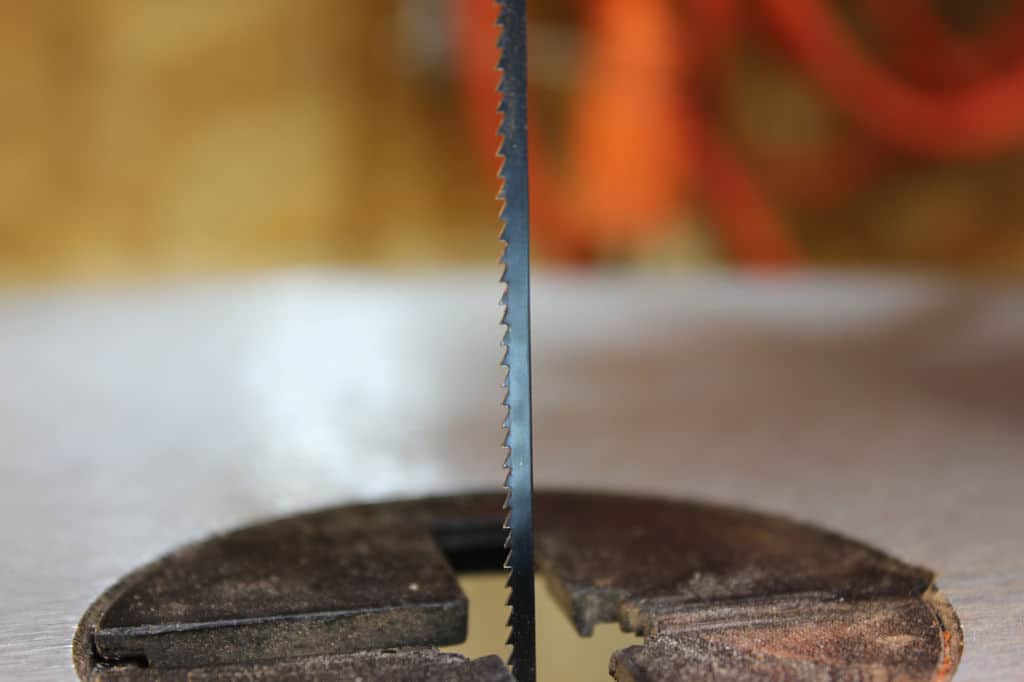
- Reverse tooth: a few teeth at the bottom point up, which reduces splintering on the underside of the cut.
- Spiral: a twisted blade with teeth all the way around, so it cuts in any direction without turning the workpiece. It leaves a rougher, wider kerf and is harder to control on sharp corners.
Teeth Per Inch (TPI)
A blade with more TPI cuts slower because its smaller teeth remove less wood per stroke, but it leaves a smoother edge and handles tighter curves. Fewer TPI cuts faster and suits thicker stock.
Scroll blades are also numbered by size, from tiny 3/0 and 2/0 up to 9 and 12. Small numbers are narrow and fine for thin stock and fretwork; larger numbers are wider and suit thick wood.
The Blade Material
Most scroll saw blades are hardened carbon steel. Blades for metal have finer teeth, and specialty blades handle very hard materials.
Brand
Blade quality varies more than you might expect. Established makers such as Olson, Pegas, Flying Dutchman, SKIL and Bosch make consistent blades.
Whichever you buy, tension the blade as your saw's manual recommends. Too little tension makes the blade wander, and too much snaps fine blades.
Final Thoughts
The best blade depends on your stock thickness and how intricate the pattern is. If you are new to scrolling, buy an assortment pack and note which sizes you reach for most.
Our top pick is the Olson Saw PG49802 for its sharp precision ground teeth, accuracy and clean underside.
Sources
- Scroll Saw Blade Selection Guide, Olson Saw
- What Scroll Saw Blade Should I Buy? Size and TPI Guide, Olson Saw