The Best Bench Grinders | Reviews of Top-Rated Models
Contents
- The Best Bench Grinders Are:
- 1. DeWALT DW756 6-Inch Bench Grinder
- 2. Delta Power Tools 23-197 8-Inch Variable Speed Bench Grinder
- 3. Craftsman 921154 6-Inch Variable Speed Grinding Center
- 4. WEN 4276 2.1-Amp 6-Inch Bench Grinder with Flexible Work Light
- Why A Bench Grinder Is The Essential Work Bench Tool
- How To Properly Use Your New Bench Grinder
- How To Maintain Your New Bench Grinder
- What Will It Cost Me To Buy The Best Bench Grinders
- Conclusion
- Sources
Bench grinders are one of those tools that are not always thought of as a woodworking tool. Yet as a woodworker, the quality of your finished product often depends on the sharpness of your tools.
You could keep purchasing brand new tools every time an edge becomes dull OR you could purchase one of the best bench grinders for woodworking to preserve your investment.
Once you have this tool, you will wonder what you ever did without it since you can now have sharpened blades and tools in minutes where you once had to sharpen by hand or completely replace.
OUR TOP PICK
Our number one pick for the best bench grinder is the DeWALT DW756 6-Inch Bench Grinder. Its 5/8 HP induction motor runs at 3,450 RPM, and the heavy base (about 24 pounds assembled, per DeWALT) keeps it planted on the bench.
The 12-1/2-inch spacing between wheels leaves room for longer workpieces.
The Best Bench Grinders Are:
| Product | Details | ||
|---|---|---|---|
| 1. DeWALT DW756 6-Inch Bench Grinder | 1. DeWALT DW756 6-Inch Bench Grinder Top Pick | - Speed: 3,450 RPM - Size: 6 Inches - Power: 5/8 HP - Power Source: Electric-Powered - Weight: about 24 pounds | Check Current Price |
| 2. Delta Power Tools 23-197 8-Inch Variable Speed Bench Grinder | 2. Delta Power Tools 23-197 8-Inch Variable Speed Bench Grinder | - Speed: 2,000 - 3,400 RPM - Size: 8 Inches - Power: 5 Amps - Power Source: Electric-Powered - Weight: 44.2 pounds | Check Current Price |
| 3. Craftsman 921154 6-Inch Variable Speed Grinding Center | 3. Craftsman 921154 6-Inch Variable Speed Grinding Center | - Speed: 2,000 - 3,400 RPM - Size: 6 Inches - Power: 2.5 Amps - Power Source: Electric-Powered - Weight: 30.8 pounds | Check Current Price |
| 4. WEN 4276 2.1-Amp 6-Inch Bench Grinder with Flexible Work Light | 4. WEN 4276 2.1-Amp 6-Inch Bench Grinder with Flexible Work Light | - Speed: 3,450 RPM - Size: 6 Inches - Power: 2.1 Amps - Power Source: Electric-Powered - Weight: 16 pounds | Check Current Price |
1. DeWALT DW756 6-Inch Bench Grinder
This 6-inch bench grinder features a powerful 5/8 HP induction motor that allows you to quickly complete heavy-duty grinding operations.
We loved the cast iron base and motor housing, adding durability and stability to this particular grinder. It runs at 3450 RPM, so you have high-speed removal and precision sharpening when you need it the most.
The 12.5-inch distance between wheels also allows for larger grinding applications. The main limit is the 6-inch wheel size, which gives you less grinding surface than an 8-inch model.
Just remember to keep your hands safe when the machine is in use!
We also like the precision-machined aluminum tool rests that come with this system, as it allows users to position their work accurately. It also has rear exhaust ports in the wheel guards, and DeWALT lists a 36-grit and a 60-grit wheel in the box.
Specs
- Speed: 3,450 RPM
- Size: 6 Inches
- Power: 5/8 HP
- Power Source: Electric-Powered
- Weight: about 24 pounds
Pros
- Heavy base that stays put
- Powerful motor for high-speed material removal
- Highly durable
- Allows for larger and longer grinding applications
Cons
- The vibration level of the unit is a bit high
2. Delta Power Tools 23-197 8-Inch Variable Speed Bench Grinder
Variable speed is the main reason to pick this 8-inch grinder. You can grind, sharpen, buff, or polish by matching the speed to the job. Part of this is due to the 5-amp motor, which lets you power up to 3400 RPM for fast work.
The speed range of this tool is from 2,000 RPM to 3,400 RPM. For grinding and sharpening, this 8-inch bench grinder comes with 36 and 60 Grit Wheels. This tool also comes with a flexible work light to help illuminate your workspace.
Specs
- Speed: 2,000 – 3,400 RPM
- Size: 8 Inches
- Power: 5 Amps
- Power Source: Electric-Powered
- Weight: 44.2 pounds
Pros
- Adjustable full-size safety shields
- Powerful induction-type motor
- Variable speed control
- A cast-iron base for durability and longevity
Cons
- It is pretty heavy
3. Craftsman 921154 6-Inch Variable Speed Grinding Center
Users often describe this model as smooth running. It is a little underpowered at 2.5 amps, but it still reaches a no-load speed of 3,400 RPM.
The lower speeds help keep vibration under control, resulting in a smoother grind that is easier for most people to handle.
The wider eye shields are transparent and help to act as spark guards as well, limiting the amount of metal flake mess that you create while using this tool.
You still need safety glasses under the shields. It includes a water-cooling tray, a handheld wheel dresser, and adjustable tool rests.
This is a variable speed unit with a speed range from 2,000 RPM to 3,400 RPM. The Craftsman 921154 is an older model and can be hard to find new.
Specs
- Speed: 2,000 – 3,400 RPM
- Size: 6 Inches
- Power: 2.5 Amps
- Power Source: Electric-Powered
- Weight: 30.8 pounds
Pros
- Variable speed settings for more control
- Large cast-iron base for more stability and reduced vibration
- Added safety features
- Allows for more accurate bit sharpening
Cons
- The motor is a little underpowered
4. WEN 4276 2.1-Amp 6-Inch Bench Grinder with Flexible Work Light
This is the lightest grinder on this list. Bolt it to your workbench and the 2.1-amp motor spins the wheels at 3,450 RPM with no load.
It is one of the least expensive grinders here, which makes it a good value for occasional sharpening.
This unit weighs only 16 pounds and it comes with a flexible work light for maximum precision and visibility.
Specs
- Speed: 3,450 RPM
- Size: 6 Inches
- Power: 2.1 Amps
- Power Source: Electric-Powered
- Weight: 16 pounds
Pros
- Lightweight and very easy to use
- Flexible work light for maximum precision and visibility
- Protective eye guards to keep your eye safe during work.
- Sturdy base for reduced vibration
Cons
- Not the best option for heavy-duty tasks
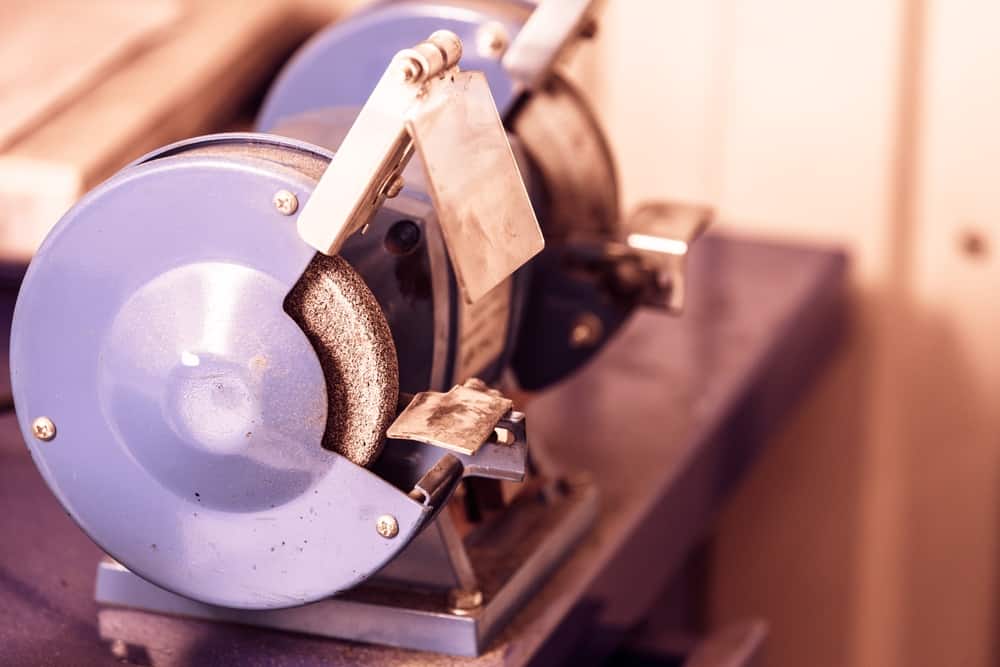
Bench grinders are a fairly basic tool. Each one spins two abrasive wheels that you can use to shape and sharpen chisels, plane irons, and other woodworking tools.
While they require a little experience to use properly, they are easy to learn how to use and can be essential for any individual who is interested in woodworking.
The best bench grinders for woodworking do not have to break your budget. While most of the inexpensive bench grinders require a compromise between speed, stability, cost, and building materials, it’s easy to find an option that works for you with a little bit of research and know-how.
Why A Bench Grinder Is The Essential Work Bench Tool
A single-speed grinder running around 3,450 RPM removes steel quickly, which is ideal for reshaping a chipped chisel or plane iron. That speed also heats a thin edge fast, so grind with light pressure and cool the tool in water often to protect its temper.
Yet the bench grinder becomes a truly necessary workbench tool when you choose a model that comes with variable speeds. These variable speed benches are one of the best options for amateur and professional woodworkers alike.
Lower speeds build less heat at the edge, and with a wire wheel or buffing wheel fitted you can also clean and polish tools. Only fit wheels rated for at least the grinder's top speed.
You also have size options available to you that can facilitate grinding, cleaning, and the other aspects of this tool that you may wish to use. Most bench grinders are either 6-inch or 8-inch models.
The 8-inch grinder is generally the better choice for woodworkers. Its wheel is 2 inches larger in diameter, so it leaves a shallower hollow grind and gives you more grinding surface.
There are 10-inch and larger models as well, but they are aimed at commercial and industrial shops. For the average woodworker, the best value comes with the 8-inch model.
The 10-inch model just costs too much money and provides little benefit for the individual that cannot be obtained from the 8-inch model. Most woodworkers do not need the biggest option, they need the best one. A good angle grinder can be a very good pair with a small bench grinder.
When purchasing a bench grinder, also check how it mounts. Bolt it to a sturdy bench or pedestal so it cannot walk or tip while the wheels spin.
Never run a grinder with the wheel guards removed. They contain sparks, grit, and fragments if a wheel breaks.
Wear safety glasses with a face shield over them, and hearing protection. CCOHS advises wearing gloves only when necessary and only if there is no risk of entanglement.
How To Properly Use Your New Bench Grinder
It is important to store your bench grinder in a careful manner. Most of the wheels that you will be using with this tool are glass-bonded products, so they are strong, but can still be quite brittle.
Any unexpected impact could damage the wheel or the bench grinder – and that type of damage is usually not covered by a manufacturer’s warranty. This means you need to store the bench grinder and its discs in an area where things will not fall on it or hit.
If you happen to be storing your woodworking equipment in a garage or toolshed, consider keeping the bench grinder away from other tools and definitely not under any hanging implements.
You will also want to check the machine speed against the maximum operating speed marked on each wheel. Running a wheel faster than its rating can make it burst, throwing fragments at high speed.
The wheels that usually come with a lot of bench grinders have a different maximum speed than that of the bench grinder itself. It is always best to check the specs and read the user manual before you use it.
Mount the grinder securely before use, then set it up the way OSHA's abrasive wheel standard requires:
- Ring-test each wheel before mounting: tap it lightly; a cracked wheel sounds dead instead of ringing. Do not use it.
- Set each tool rest no more than 1/8 inch from the wheel, and only with the grinder off.
- Keep the adjustable tongue guard within 1/4 inch of the wheel.
- Stand to one side when you switch the grinder on until the wheel reaches full speed.
- Grind on the face of the wheel, not the side of a regular wheel.
Finally, you are going to want to determine whether or not you want a work light. A work light will keep your workstation illuminated.
This addition is valuable if you have a special place where you perform your woodworking such as a barn, garage, or shed where you keep all of your tools. The ideal style will be a flexible work light that can be adjusted to suit different angles.
Some grinders, like the WEN and Delta models above, include one. Otherwise, you can add a separate flexible lamp.
Above all else, you will also want to control dust and protect yourself from particulates when using the best bench grinders for woodworking. Use your personal protective equipment and consider adding a dust collection bin or bag if your preferred model does not collect dust on its own.
Grinding throws off fine metal and abrasive dust. Wear a dust mask along with eye and face protection, and keep sawdust away from the grinder, since sparks can ignite it.
After carefully examining several different options currently on the market, we have determined that the award for best bench grinder for woodworking should go to the Dewalt model for its heavy-duty grinding and stable operation.
How To Maintain Your New Bench Grinder
Owning a bench grinder is just one-step of the process. For proper woodworking, you will also need to know how to maintain your bench grinder.
Otherwise, you will be only receiving a partial benefit from this tool and you could be putting your project or your health at risk. Most bench grinders come with instructions, so be sure to read any documents that come with the bench grinder.
Most wheels are made from aluminum oxide or silicon carbide. Aluminum oxide suits Ferrous metals such as tool steel, while silicon carbide suits nonferrous metals and carbide.
When buying a bench grinder, there will usually be information about what type of wheels are included. You can use an angle grinder wheel for cutting metals. Replacement bench grinder wheels are sold at most hardware and woodworking stores.
To maintain these wheels, you’ll want to dress them regularly so that you can remove any clogged grains that may be on the wheel. You have two options available to you: diamond dressers or star-wheel dressers.
We recommend this diamond dresser for general needs. We also recommend this emery star-wheel dresser.
A star-wheel dresser is good for fast, rough cleanup of a clogged or out-of-round wheel. A diamond dresser leaves a flatter, truer face for finer sharpening.
Many owners use the star-wheel dresser first and finish with the diamond dresser. Just run the dresser across the wheel on the tool rest, as instructed by the manufacturer.
Inspect each wheel for chips or cracks before use. When you mount a wheel, tighten the nut enough to hold it, but do not overtighten it; excess force can crack the wheel.
What Will It Cost Me To Buy The Best Bench Grinders
Compared to the cost of constantly replacing dull tools or having a professional sharpener address them for you, a bench grinder is reasonably affordable.
The least expensive bench grinders are usually 6-inch models, which may not suit every woodworker. Mid-priced 8-inch grinders often add features like an attached light or variable speed, and they suit most home shops.
Remember to always check what is included in the initial price you are given. While some sellers will include a variety of add-ons such as flexible work light or extra blades, others will only give you the bare bones and expect you to pay extra for other features.
Industrial-grade bench grinders cost considerably more and are meant for production shops. Many of these models have more powerful motors.
Over time, you will also need to replace the wheels. Fine-grit and specialty wheels generally cost more than standard coarse wheels.
The grit of the wheel refers to how abrasive it is. In general, the lower the grit number, the coarser the wheel. A 36-grit wheel has larger grains and is best for fast shaping and repairing damaged edges.
A finer grit, such as 60 or higher, leaves a smoother bevel that is easier to hone afterward.
If you want a fully functional bench grinder that can be used for a variety of tasks, you are going to want wheels of different grits. Most woodworkers should have at least two or three for diversity and range.
Conclusion
Our top pick for the best bench grinder is the DeWALT DW756 6-Inch Bench Grinder because its 5/8 HP motor delivers a no-load speed of 3,450 RPM.
Its heavy base keeps it steady, and the wide spacing between wheels allows for longer and larger grinding work.