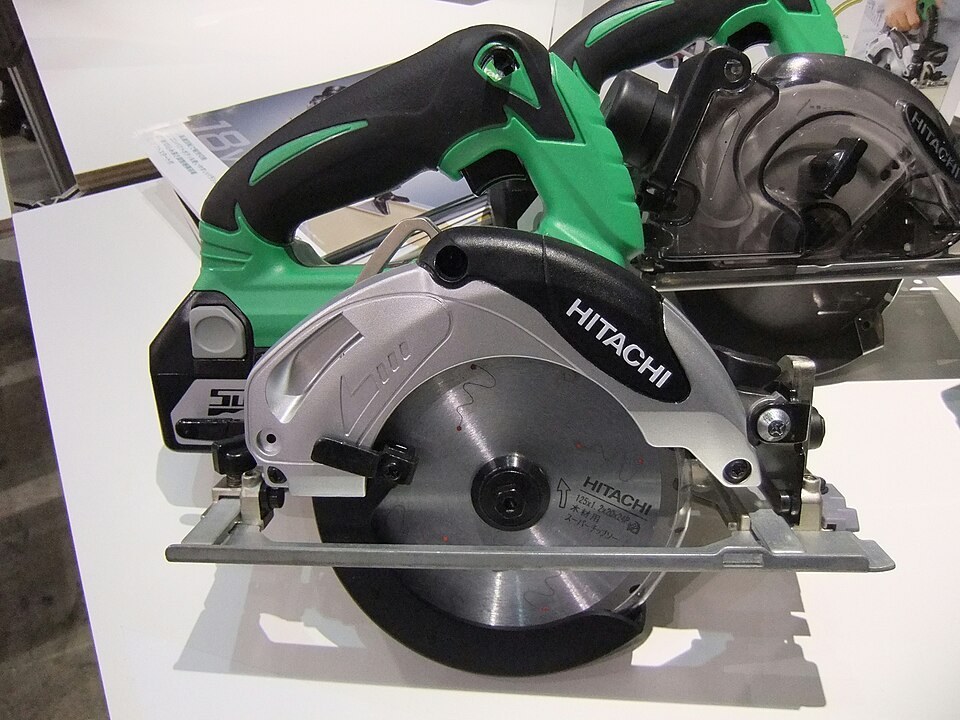
6 1/2 vs 7 1/4 Circular Saw: Which Gets the Job Done Better?
Contents
- 6 1/2 vs 7 1/4 Circular Saw: Some Reviews
- 1. Dewalt DCS391B 6 1/2 Inch Circular Saw – Overall Best
- 2. Makita SP6000J1 6 1/2 Circular Saw – Best Plunge Saw
- 3. Milwaukee 2730-20 M18 6 1/2 Circular Saw – Most Efficient Motor
- 4. Dewalt DCS575T2 7-1/4 Circular Saw – Overall Best
- 5. Makita 5007MG 7 1/4 Circular Saw – Best Magnesium Components
- 6. SKIL 5280-01 7-1/4 Circular Saw – Best Single Beam Laser Guide
- How To Pick The Right Tool
- Direct Drive Vs Worm Drive
- Circular Saw Blades
- 6.5 Vs 7.25 Circular Saw – Which Is The Better Option?
- Bevel Cutting Capacity
- Final Thoughts
- Sources
The 6 1/2 vs 7 1/4 Circular Saw, which offers a superior cutting capacity and bevel capacity?
Are you shopping for a circular saw but unsure what you give up with a 6-1/2-inch model instead of a 7-1/4-inch one?
The biggest difference is cutting depth. Manufacturer specs put most 6-1/2-inch saws at about 2-1/8 to 2-3/16 inches at 90 degrees, while a typical 7-1/4-inch saw such as the Makita 5007MG cuts 2-1/2 inches.
Here is how that and the other differences play out.
OUR TOP PICK
Our 6 1/2 circular saw pick is the Dewalt DCS391B. This compact 20V saw is light, cuts 2x lumber at 90 degrees, and bevels to 50 degrees.
OUR TOP PICK
Our 7 1/4 circular saw recommendation is the Dewalt DCS575T2, a 60V FLEXVOLT saw with an electric brake and a 57-degree bevel capacity.
6 1/2 vs 7 1/4 Circular Saw: Some Reviews
| Product | Details | ||
|---|---|---|---|
| 1. Dewalt DCS391B 6 1/2 Inch Circular Saw | 1. Dewalt DCS391B 6 1/2 Inch Circular Saw Top 6 1/2 Circular Saw | - 6.5-inch carbide blades - Battery operated - Lightweight magnesium shoe - Overmolded comfort grip - Large bevel capacity | Check Current Price |
| 2. Makita SP6000J1 6 1/2 Circular Saw | 2. Makita SP6000J1 6 1/2 Circular Saw | - Blade diameter of 6-1/2-inch - Strong 12-amp motor - Soft start feature - Electronic speed control - Large cutting capacity | Check Current Price |
| 3. Milwaukee 2730-20 M18 6 1/2 Circular Saw | 3. Milwaukee 2730-20 M18 6 1/2 Circular Saw | - Blade diameter of 6-1/2-inch - Cast magnesium shoe - Powerstate brushless motor - Advanced electronic system - Integrated LED light | Check Current Price |
| 4. Dewalt DCS575T2 7-1/4 Circular Saw | 4. Dewalt DCS575T2 7-1/4 Circular Saw Top 7 1/4 Circular Saw | - Blade diameter of 7-1/4-inch - Brushless motor - Electronic brake - Large bevel capacity of up to 57 degrees - Battery kit included | Check Current Price |
| 5. Makita 5007MG 7 1/4 Circular Saw | 5. Makita 5007MG 7 1/4 Circular Saw | - Blade size of 7-1/4 inches - Lightweight magnesium components - Powerful 5800 RPM motor - Large cutting capacity - Superior bevel capacity | Check Current Price |
| 6. SKIL 5280-01 7-1/4 Circular Saw | 6. SKIL 5280-01 7-1/4 Circular Saw | - Blade size of 7-1/4 inches - Powerful 5300 RPM motor - Spindle lock system - Large bevel capacity range - Integrated dust blower | Check Current Price |
1. Dewalt DCS391B 6 1/2 Inch Circular Saw – Overall Best
If you want a light cordless 6-1/2-inch circular saw for a 20V MAX battery platform, the Dewalt DCS391B is a solid choice.
Specs
- 6-1/2-inch carbide-tipped blade included
- 5,150 RPM motor
- Lightweight magnesium shoe
- 0 to 50 degree bevel
- Tool only: battery and charger sold separately
According to DeWalt’s DCS391B page, the saw runs at 5,150 RPM, has a magnesium shoe, and bevels from 0 to 50 degrees.
It cuts through 2x lumber at 90 degrees, but not at a 45-degree bevel. Keep in mind that it is sold as a bare tool.
Pros
- Light and compact
- Lightweight magnesium shoe
- Large bevel capacity allows for optimized cutting
- Overmolded grip improves balance and control
Cons
- Shallower cut than a 7-1/4-inch saw
- Battery not included
Conclusion
The lightweight Dewalt DCS391B is a good pick if you already own DeWalt 20V batteries.
Overall Rating – 4.7
2. Makita SP6000J1 6 1/2 Circular Saw – Best Plunge Saw
The Makita SP6000J1 is a plunge cut track saw, not a standard circular saw. It is built for straight, splinter-free cuts on sheet goods when paired with Makita’s guide rail.
Specs
- Blade diameter of 6-1/2-inch
- Strong 12-amp motor
- Soft start feature
- Variable speed, 2,000 to 5,200 RPM
- 2-3/16 inch cut at 90 degrees
Per Makita’s SP6000J specifications, it cuts 2-3/16 inches deep at 90 degrees and 1-9/16 inches at 45 degrees.
It bevels from -1 to 48 degrees, with positive stops at 22.5 and 45 degrees. Electronic speed control holds the speed under load.
Pros
- Delivers precision straight cuts
- Dust port helps direct dust away from you
- Capable of maintaining constant speed
- Soft start mechanism ensures smooth startups
- Ideal model for plunge cuts
Cons
- Costs more than a standard circular saw
- Works best on a guide rail; check what your kit includes
Conclusion
The Makita SP6000J1 is the pick here for clean, straight cuts in plywood and cabinet panels.
Overall Rating – 4.6
3. Milwaukee 2730-20 M18 6 1/2 Circular Saw – Most Efficient Motor
The Milwaukee 2730-20 is a brushless M18 FUEL saw aimed at pros who want corded-style performance without the cord.
Specs
- Blade diameter of 6-1/2-inch
- Cast magnesium shoe
- Powerstate brushless motor
- Advanced electronic system
- Integrated LED light
It has a brushless motor, a cast magnesium guard and shoe, an LED light, and a rafter hook.
Milwaukee’s REDLINK PLUS electronics protect the tool and battery from overloading, overheating, and over-discharging. The battery is not included with the 2730-20.
Pros
- Very efficient brushless motor
- Has overheating and overloading protection
- Cast magnesium shoe is highly durable
- Large cutting capacity adds versatility
- LED lighting improves visibility
Cons
- Battery sold separately
- Shallower cut than a 7-1/4-inch saw
Conclusion
If you want cordless convenience, efficient motor performance, superior visibility, and added versatility, look no further than the Milwaukee 2730-20 M18.
Overall Rating – 4.5
4. Dewalt DCS575T2 7-1/4 Circular Saw – Overall Best
The Dewalt DCS575T2 is a 60V FLEXVOLT kit with a brushless motor and an electric brake. DeWalt no longer lists this kit on its website, so check that it is still sold new before you buy.
Specs
- Blade diameter of 7-1/4-inch
- Brushless motor
- Electronic brake
- Large bevel capacity of up to 57 degrees
- Battery kit included
This saw pairs a brushless motor with a 7-1/4-inch blade, so it cuts 2x lumber in one pass with room to spare.
The electric brake stops the blade quickly after you release the trigger, which is a real safety plus.
The blade sits on the right side of the motor, like most sidewinder saws. Right-handed users have to lean over the saw to see the cut line.
Pros
- Motor is efficient and high performing
- Full 7-1/4-inch cutting depth
- Electric brake improves tool safety
- Large bevel capacity for different applications
- Battery pack is included
Cons
- Blade on the right makes the cut line harder to see
- May no longer be sold new
Conclusion
The Dewalt DCS575T2 brings near-corded cutting capacity to a cordless saw.
Overall Rating – 4.8
5. Makita 5007MG 7 1/4 Circular Saw – Best Magnesium Components
Aimed at carpenters, roofers, and framers, the Makita 5007MG is a corded 15-amp saw with magnesium components.
Specs
- Blade size of 7-1/4 inches
- Lightweight magnesium components
- Powerful 5800 RPM motor
- Large cutting capacity
- Superior bevel capacity
Per Makita’s 5007MG specifications, the saw weighs 10.6 pounds, runs at 5,800 RPM, cuts 2-1/2 inches deep at 90 degrees, and bevels from 0 to 56 degrees.
It comes with a 7-1/4-inch carbide framing blade and has a built-in dust blower to keep the cut line clear.
As with any circular saw, check that the lower guard springs back freely before each use. A guard that sticks open is a safety hazard, not just an accuracy problem.
Pros
- Large blade size maximizes cutting performance
- Easy to read settings allow for ease of use
- Positive stops allow for quick bevel adjustments
- Magnesium components provide superior balance
- Built-in dust blower keeps the cut line visible
Cons
- Heavier than cordless 6-1/2-inch saws
- Corded
Conclusion
This 7-1/4-inch saw combines a 15-amp motor, magnesium components, and quick bevel adjustments.
Overall Rating – 4.8
6. SKIL 5280-01 7-1/4 Circular Saw – Best Single Beam Laser Guide
The SKIL 5280-01 is a budget corded 7-1/4-inch circular saw with a laser guide.
Specs
- Blade size of 7-1/4 inches
- Powerful 5300 RPM motor
- Spindle lock system
- Large bevel capacity range
- Integrated dust blower
Its motor runs at up to 5,300 RPM, and the laser line helps you follow a marked cut.
The spindle lock holds the blade shaft still for easier blade changes.
The depth adjustment lever is plastic, so treat it gently.
Pros
- Lightweight design reduces user fatigue
- Laser beam system boasts precision cutting
- Safety lock minimizes accidental startups
- Wide footplate improves stability
- Built-in dust blower improves cut line visibility
Cons
- Plastic depth lever
- Less refined than pro-grade saws
Conclusion
The SKIL 5280-01 is a sensible budget saw for occasional lumber cutting.
Overall Rating – 4.6
How To Pick The Right Tool
There are various things you have to take into account when picking the right circular saw, which include:
Direct Drive Vs Worm Drive
A direct drive saw sometimes referred to as a sidewinder saw, is a type of circular saw that is quite popular on the market. Its motor is on the side (either left or right side), in line with the blade.
A worm drive saw, on the other hand, is a type of circular saw with its motor behind the blade, driving it through worm gears. Worm drive saws are longer and heavier than direct drive models.
Worm drive units trade blade speed for more torque, which helps in long rip cuts and wet lumber. Direct drive saws spin faster and are lighter, which suits most DIY work.
Circular Saw Blades
The size of the blade (either 6-1/2-inch or 7-1/4-inch) isn’t enough to determine the cutting performance of a circular saw. You need to consider the shape and number of teeth around the circumference of the blade to determine the cutting action.
Most saws today use carbide-tipped blades rather than high-speed steel. They stay sharp much longer.
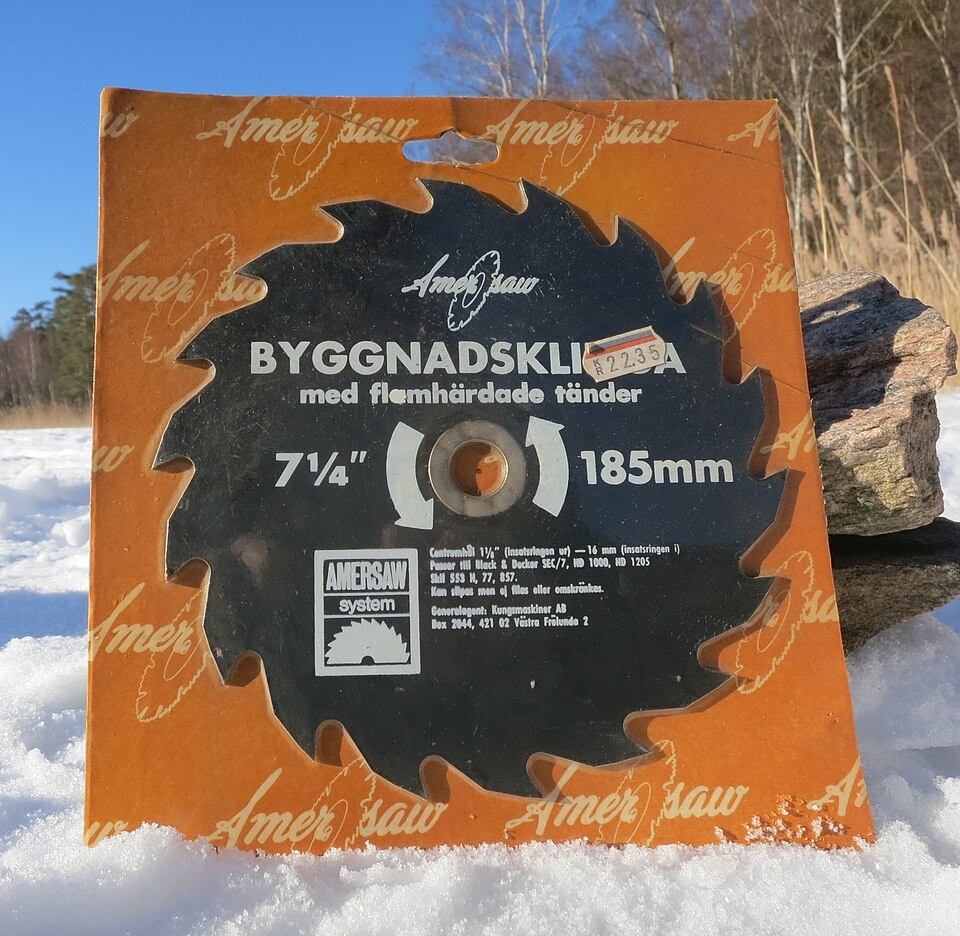
Photo by R. Henrik Nilsson, CC BY 4.0, via Wikimedia Commons
6.5 Vs 7.25 Circular Saw – Which Is The Better Option?
6 1/2 vs 7 1/4 Circular Saw, what makes one type better than the other?
Blade Diameter and Cutting Capacity
From a practical standpoint, blade diameter matters more than power rating. The larger the blade, the greater the cutting depth.
Saws that take 6-1/2-inch blades are smaller and lighter. They cut sheet goods and 2x lumber at 90 degrees, but at a 45-degree bevel their depth drops to about 1-1/2 to 1-9/16 inches, which won’t get through a 2x board.
A 7-1/4-inch saw cuts about 2-1/2 inches at 90 degrees and 1-3/4 inches at 45 on the Makita 5007MG. That covers beveled cuts in 2x lumber in a single pass.
Bevel Cutting Capacity
The next distinguishing factor between these two types of circular saws is bevel cutting capacity. Bevel cutting involves cutting the edges or ends of a workpiece with the blade tipped to some angle other than 90 degrees.
Bevel range depends on the model more than the blade size. The DCS391B bevels to 50 degrees, the SP6000J to 48, and the 5007MG to 56.
The bigger difference is depth: a 7-1/4-inch saw keeps enough depth at steep bevels for 2x lumber.
Final Thoughts
If you want a lighter saw for sheet goods and general DIY work, a 6-1/2-inch circular saw is a good choice.
If you cut a lot of 2x lumber, especially at a bevel, a 7-1/4-inch circular saw is the better option. Whichever you pick, keep the guard working, support the work so the kerf doesn’t pinch, and stand to the side of the cut in case of kickback.
The Dewalt DCS575T2 wins this battle when you consider blade cutting capacity, bevel cutting capacity, and versatility for a wide range of applications.
However, the lightweight design and portability of the Dewalt DCS391B win in providing you with a portable saw that will not cause user fatigue at the jobsite.
Sources
- DCS391B 20V MAX 6-1/2 in. Circular Saw, DeWalt
- 5007MG 7-1/4 in. Magnesium Circular Saw, Makita
- SP6000J 6-1/2 in. Plunge Circular Saw, Makita
- M18 FUEL 6-1/2 in. Circular Saw 2730-20, Milwaukee Tool